Health includes physical, mental and social well-being, as recognised by the World Health Organization (WHO). Mental health is an essential part of health, enabling people to cope with everyday challenges, work effectively and participate in society.
Work-related stress occurs when job demands exceed a person’s ability or resources to cope with them. Prolonged or excessive stress can harm physical and mental health, affecting well-being, safety and work performance.
Working conditions, job design and organisational practices play an important role in protecting mental health. Prevention starts with identifying and reducing workplace stressors at their source.
How can ergonomics contribute?
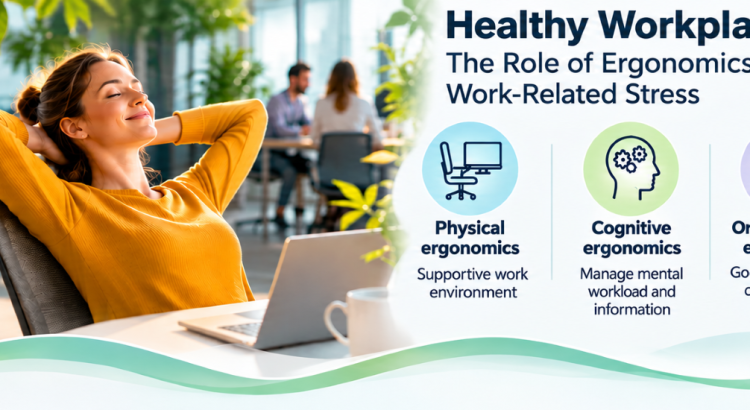
Ergonomics helps create work systems that support human health, safety and performance. Three complementary areas offer practical opportunities for preventing work-related stress:
- Physical ergonomics: Improving workplace layout, lighting, noise conditions, equipment and physical workloads to reduce unnecessary strain and discomfort.
- Cognitive ergonomics: Managing mental workload, reducing interruptions and information overload, and designing clear instructions, intuitive interfaces and effective human–technology interactions.
- Organisational ergonomics: Improving workload distribution, work schedules, role clarity, communication, employee participation and organisational support.
These approaches help organisations address psychosocial hazards through better work design and management. Risk assessment, worker participation and continuous improvement are essential elements of effective prevention.
Individual stress management and mental health support provide valuable additional protection.
Five resources for practical action
1. EU-OSHA – Healthy Workplaces Campaign 2026–2028
Together for mental health at work
European campaign materials, practical guidance and tools for psychosocial risk prevention.
2. UK Health and Safety Executive (HSE)
Working Minds – Preventing Work-Related Stress
Practical guidance, stress risk assessment tools and resources for workplace action.
3. International Labour Organization (ILO)
The Psychosocial Working Environment: Global Developments and Pathways for Action
A 2026 report examining psychosocial hazards, work organisation and preventive approaches.
4. World Health Organization (WHO)
WHO Guidelines on Mental Health at Work
Evidence-based recommendations for organisational interventions and workplace mental health protection.
5. International Stress Management Association (ISMA)
International Stress Awareness Week 2026
Campaign information, awareness materials and resources supporting stress prevention and well-being.
Prevention through better work design
Effective prevention requires understanding how work is actually performed, identifying sources of unnecessary pressure and involving workers in developing improvements.
The ergonomic principle is clear: Design work to fit people.
Better work design contributes to healthier employees, safer workplaces and more sustainable organisations.
This post on work-related stress prevention was prepared with AI assistance and reviewed for accuracy and source reliability.