New ergonomists in the Eur Erg register

The 51st Council Meeting of the Centre of Registration of European Ergonomist was held in Buxton, UK, 8-10 June 2017.

Yushi Fujita the president of the International Ergonomics Association (IEA) and Sylvain Leduc president of the Federation of European Ergonomist Societies (FEES) attended the meeting,
and exchanged ideas regarding the international collaboration to promote ergonomics and the certification system.

The 51st Council Meeting of the Centre of Registration of European Ergonomist was held in Buxton, UK, 8-10 June 2017.

Yushi Fujita the president of the International Ergonomics Association (IEA) and Sylvain Leduc president of the Federation of European Ergonomist Societies (FEES) attended the meeting,
and exchanged ideas regarding the international collaboration to promote ergonomics and the certification system.

Having approved 23 new applications and 37 renewals, there are over 500 person in the register, including Sirge Triinu, the first registered ergonomist
from Estonia assessed by the recently founded Latvian NAB.

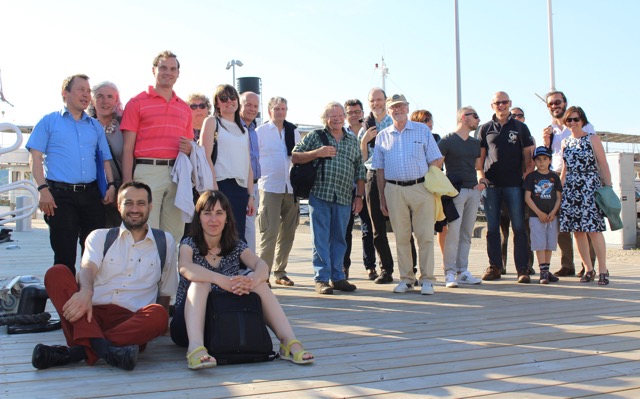
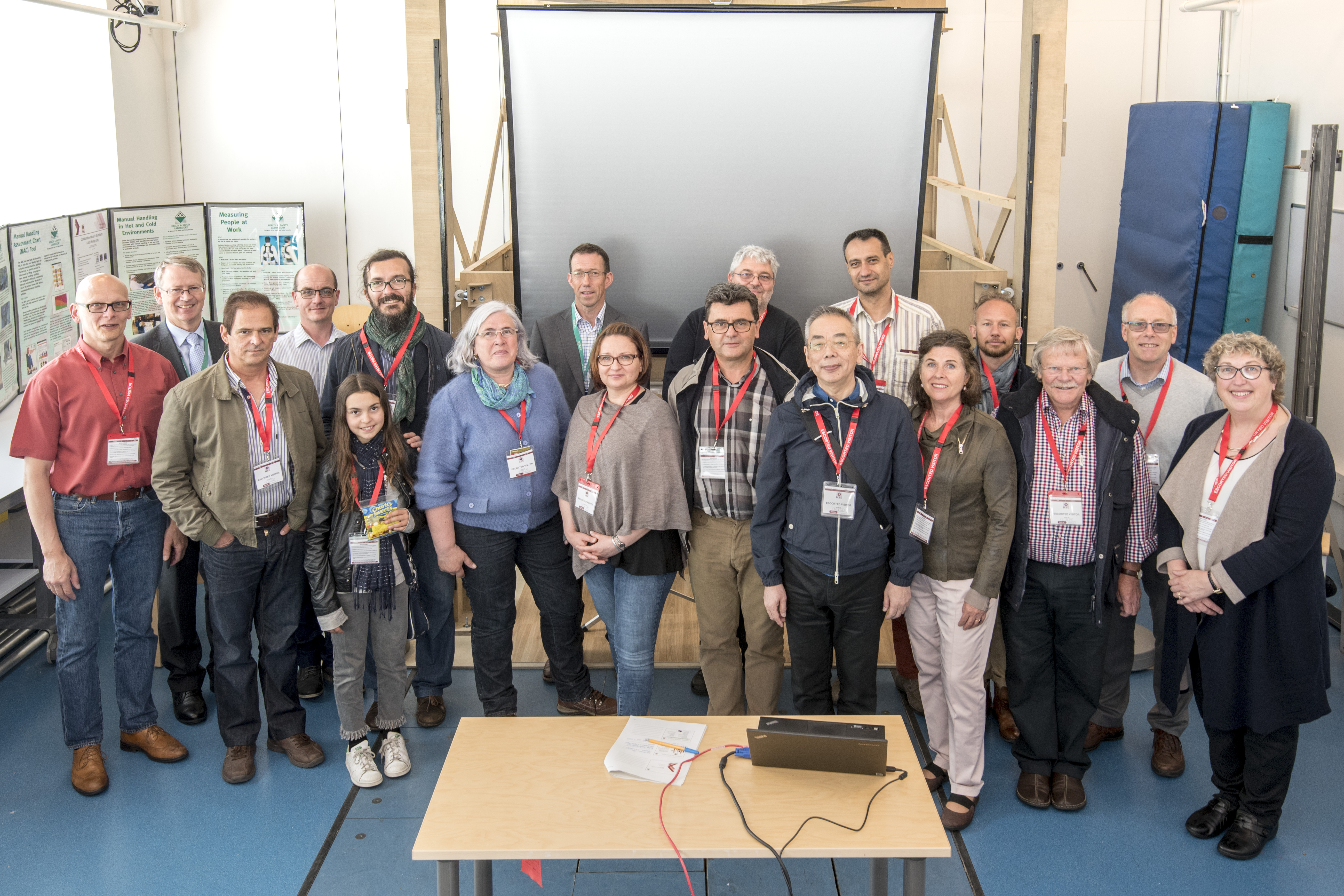
The meeting was hosted by Chartered Institute of Ergonomics and Human Factors (the CIEHF), and included a field visit to the Health and Safety Laboratory. (Photo taken at the site visit)

CREE M51

FEES – ETUI – BES – CREE conference

IEA Conference organised by the Federation of European Ergonomics Societies (FEES), ETUI (European Trade Union Institute), the Belgian Ergonomics Society (BES) an the CRRE (Centre for Registration of European Ergonomics ®) in the auditorium of International Trade Union House (ITUH), Boulevard du Roi Albert II 5,

IEA Conference organised by the Federation of European Ergonomics Societies (FEES), ETUI (European Trade Union Institute), the Belgian Ergonomics Society (BES) an the CRRE (Centre for Registration of European Ergonomics ®) in the auditorium of International Trade Union House (ITUH), Boulevard du Roi Albert II 5, 1210 Brussels, Belgium on 26th and 27th June 2017.

ETUI jobs The conference focuses on the issues of creativity related to the improvement of the working conditions by workers and worker representatives participation.

For many years now in Europe, participatory ergonomics has highlighted the importance of taking account of workers’ expertise with respect to their situations and working conditions and of how workers’ experiences are perceived within companies.

Participatory ergonomics covers different realities depending on what it sets out to achieve: better primary prevention, fewer muscular-skeletal disorders (MSDs), transformed work situations, adjusted or more appropriately designed work equipment or machinery, etc. It also covers many different methodologies and can assume many different forms.

Today, ergonomics faces questions associated with the notion of creativity. Ergonomists encounter creativity in all domains of their activity: workspaces, organisation, design, cognition, systems’ resilience, etc. The questions are as follows: Do collaborative workspaces (co-working spaces that are ‘third places’) promote creativity? How can the company promote creativity? Which suitable processes and tools can serve this purpose? How can new products be made that are tailored to their uses and users? How do new ideas emerge? What happens when the rules of work or working procedures no longer apply? How can creativity be unleashed in unplanned situations?

BES Logo

Thus, the issue of creativity once again raises the old question asked by the ergonomics of activity regarding workers’ initiative. Today, creativity can serve to help explain what ergonomists have been showing for a very long time already, namely how workers regulate and develop operational procedures that enable them to work and cope with unforeseeable factors. To what extent do initiatives taken by operators in the field to ensure the performance and resilience of systems constitute real innovations?

Accordingly, the main topics we intend to address at the conference are:

  • How creative are workers in designing/rectifying work situations? The challenge is to show the creative contributions made by workers in general (knacks, extended applications (e.g. use of tools for other than their primary functions), adaptation of existing tools, creative uses, resilience, etc.) and to take an interest in what they can be expected to contribute in terms of creativity, amongst other things.
  • Does the participation and creativity of workers as experts in their activity allow the co-construction of suitable, shared solutions for improving and transforming working conditions?
  • Can participatory ergonomics provide answers to changes in the quality of work and employment status, to issues associated with increasing the age of retirement, the ageing workforce and the challenges of technological advances and labour-related changes (industry 4.0, digitalisation, robotisation, cobotics, etc.)?
  • CREE Logo

  • What are the prerequisites for workers’ participation in ergonomic intervention? Do workers and their representatives need to be trained in ergonomics to aim for more efficient ergonomic intervention?
  • Does professionalising workers or their representatives through training lead to better interaction with the other agents of prevention (occupational physicians, labour inspectors, prevention consultants, etc.) conducive to the development of innovative and creative ergonomic solutions?

FFES Logo

Program

MONDAY 26 JUNE 2017

13:00 Welcome coffee

13:30 Introduction and welcome speeches

  • BES: Dirk DELARUELLE, President
  • ETUC: Esther LYNCH, Confederal Secretary
  • European Commission: Felicia STOICA, Directorate-General for Growth
  • International Ergonomics Association: Yushi FUJITA, President

14:00 Chair: Sylvain LEDUC, FEES/Moderator: Alain PIETTE, BES

  • Working conditions European survey: Agnès PARENT-THIRION, Eurofound
  • Working conditions in Belgium: Patricia VENDRAMIN, Université Catholique
    de Louvain

15:00 Coffee break

15:30 Chair: Dave O’NEILL, CREE/Moderator: Gyula SZABO, FEES

  • Ageing at work in Portugal: Teresa COTRIM, Lisbon University, Portugal
  • Working conditions in Latvia: Henrijs KALKIS, Riga University, Latvia
  • Working conditions in Finland: Risto TOIVONEN, FES, Finland

17:00 Debate and general discussion

18:00 Conclusion: José Orlando GOMES, IEA

TUESDAY 27 JUNE 2017

09:00 Chair: Marianne DE TROYER, ETUI/Moderator: Pascal ETIENNE, FEES

  • Workers’ participation by feedback method: Fabio STRAMBI, ETUI advisor on ergonomics and standardisation & Massimo BARTALINI, USL Toscana, Italy
  • Relation between ergonomists and workers’ representatives: Eloïse GALIOOT & Ludovic PONGE, SELF, France
  • Workers’ participation in practice: David WALTERS, Cardiff University, UK
  • Coffee break
  • 10:45 Trade union cooperation against work-related cancers: the case of chemicals: Tony MUSU, ETUI
  • Creativity and innovation in business: Yushi FUJITA, IEA

11:45 Debate and general discussion

12:30 Lunch

13:30 Chair: Sylvain LEDUC , FEES /Moderator: Aude CUNY, INRS

  • Reflection on creativity in practice: Giulio TOCCAFONDI, Clinical Risk Management Toscana Region, Italy
  • Worker involvement in occupational health and safety: evidence from ESENER: Xabier IRASTORZA, EU-OSHA
  • Talking about work: Bénédicte MOUTIN, CFDT, France
  • The cobots, issues related to participation with robots: Théo MOULIERES-SEBAN, Safran, France
  • Creativity study in manufacturing of white goods and their outside innovators: Annegret PETZOLDT, GfA, Germany
  • Stronger together: human factors, safety and productivity: Steve BARRACLOUGH, CIEHF, UK

16:45 Debate and general discussion
Conclusion: Sylvain LEDUC, FEES

17:00 End of conference

Registration of the participants is free of charge. Due to the limited numbers of seats, FEES member societies are invited to send the names of their representatives to the conference, as soon as possible. 
Ergonomics education, training and courses

CREEThe Federation of European Ergonomist Societies (FEES) and the Centre of Regi

CREEThe Federation of European Ergonomist Societies (FEES) and the Centre of Registration of European Ergonomist (CREE) are often asked where people can get training to be an ergonomist. Some countries have courses in ergonomics that completely cover all of the educational requirements for CREE registration. It is also possible to do courses that largely cover the educational requirements and to make up for the deficits by doing shorter courses or taking modules at other institutions. CREE accepts training that has been put together from studies at a number of institutions; however, they should all be at university or college level.

The courses in the following list have been recommended by the national societies as offering most or all of the components that are part of the minimum requirements for registration. CREE does not certify courses and cannot guarantee the content or continuation of any course, as this is at the discretion of the institutions that offer the courses. You should check with the course supervisors to find out how well the course matches the CREE requirements (and if it is still available). The course supervisors are also generally able to offer advice about additional courses that you may need to do to reach the CREE minimum educational criteria.

CREE does not endorse these courses or profit from providing this information. There is no guarantee that the information for any country is complete. If you are offering a course and feel that it is suitable for listing on this website, please contact the CREE representative for your area (see list on CREE website under “About CREE”) https://www.eurerg.eu/about-cree/.

Belgium
Advanced Master in Risk Management and Well-Being in the Workplace (option Ergonomics)
(Master complémentaire conjoint en gestion des risques et bien être, option Ergonomie) (French)
Consortium of 4 French Universities: ULg-ULB-UCL-UMH Link
Specialization module, level 1, ergonomics
(Specialisatiemodule level 1 – Ergonomie) (Flemmish)
Odisee, campus Brussel link
Finland (Finnish)
Bachelor of Health Sciences (ergonomics) University of Eastern Finland (UEF)
Information in English: Link
Head of Course: Kimmo Räsänen
Master of Health Sciences (ergonomics) University of Eastern Finland (UEF) Link
Head of Course: Kimmo Räsänen
France (French)
Professional Masters Degree in Social movements, work and organisations.
(Psychologie/Spécialité Dynamiques sociales, Travail et Organsations)
University of Picardie Jules Verne Link
Master of Occupational Psychology Ergonomics
(Psychologie du travail ; Management des organisations, évaluation et ergonomie)
University Lille 3 Link
Professional Master 1 and 2 in Health Engineering
(Ingénierie de la Santé)
University of Law and Health Lille 2 Link
Master 1 and 2: Ergnomics, work, education, daily life
(Ergonomie, travail, formation, vie quotidienne)
University of Paris 8 Link
Master 1 and 2: Work and Development. Specialty Ergonomics
(Travail et Développement: Spécialité Ergonomie)
Cnam : Paris, Toulouse, Nantes, Aix, Caen Link
Master 1 and 2 : Occupational psychology, ergonomics and orientation
(Pschologie de Travail, Ergonomie et Orientation)
University of Paris West Nanterre-La Défense Link
Professional Master 2: Ergonomics, Organisation and Workplace
(Ergonomie, Organisation et Espace du Travail)
University of Paris 1 Pantheon-Sorbonne Link
Professional Master 1 and 2: Ergonomics and Human Factors Engineering
(Ergonomie et Ingénierie Facteurs Humains)
University of Paris Descartes Link
Master 1 and 2: Health Engineering
(Ingénierie de la santé)
University of Paris South Link
Master 1 and 2: Psychology, Ergonomics and Human Factors Engineering
(Psychologie, Ergonomie et Ingénierie des Facteurs Humains)
University of Lorraine – Metz Link
Professional Master 1 and 2: Cognitive sciences and ergonomics
(Sciences cognitives et ergonomie)
University of Bordeaux Link
Master 1 and 2: Body experience and ergonomics
(Expérience corporelle et ergonomie)
Blaise Pascal University Clermond-Ferrand Link
Professional Master 2 and Research Masters University of Lumiere Lyon 2: Institute of Work Studies Link
Master 1 and 2: Ergonomics University of Champollion, Albi Link
Master 1 and 2: Ergonomics University of Toulouse Jean Jaurès Link
Master 1 and 2: Ergonomics, Cognitive technical Innovations and Human Factors
(Ergonomie Cognitive Innovations technologiques et Facteur Humain)
University of Toulouse Jean Jaurès Link
Professional Master and Research Master
(Ergonomie: facteurs humains et ingénierie des systems d’information)
Univerisity of Aix-Marseille Link
Germany (German)
Master of Human Factors Engineering Technical University of Munich
Information in English: Link
Head of Course: Klaus Bengler
Italy (Italian)
Diploma in Ergonomics Bologna – INAIL
Master in Ergonomics University of Naples
Academic Master in Ergonomics Università degli Studi di Napoli Federico II Link
Bachelor in Ergonomics in Design Milan Polytechnic University
Bachelor in Ergonomics in Design University of Florence
Bachelor in Applied Psychology University of Turin
Vocational Master in Ergonomics Società Italiana di Ergonomia Link
Latvia (Latvian)
Master of Labour protection and Expertise University of Latvia
Bachelor of Safety Engineering Riga Technical University
Portugal (Portugese)
Master in Ergonomics Lisbon University
Information in English: Link
Head of Course: Catarina Silva
Bachelor of Ergonomics Lisbon University
Information in English: Link
Head of Course: José Carvalhais
Sweden (Swedish)
Affiliation discipline for Master and Bachelor courses: Engineering University of Gothenborg
Affiliation discipline for Master and Bachelor courses: Engineering University of Luleå
Affiliation discipline for Master and Bachelor courses: Engineering University of Lund
Affiliation discipline for Master and Bachelor courses: Engineering University of Linköping
Master’s programme in Technology, Work and Health KTH Royal Institute of Technology in Stockholm Link
United Kingdom (English)
See also the list of CIEHF accredited courses Link
BSc User Centred Design Loughborough University
Link
MSc Health Ergonomics University of Derby Link
(offered through online/distance learning)
MSc Ergonomics (Human Factors) University of Derby Link
(offered through online/distance learning)
MSc Ergonomics and Organisational Behaviour University of Derby Link
(offered through online/distance learning)
MSc Human-Computer Interaction with Ergonomics University College London Link
MSc Ergonomics and Human Factors Loughborough University Link
MSc Ergonomics for Health Professionals Loughborough University Link
MSc Human Factors in Transport Loughborough University Link
MSc Human Factors for Inclusive Design Loughborough University Link
MSc Human Factors Heriot-Watt University Link
(including a distance learning option)
MSc Human Factors and Ergonomics University of Nottingham Link
MSc Applied Ergonomics and Human Factors University of Nottingham Link
(offered through online/distance learning)

IEA Round Table “Ergonomics in design for all” 2016

A round table discussion on Ergonomics and Design for All took place during a congress on ergonomics organized by the Dutch organization “Human Factors vereniging” in Amersfoort, NL in November 2016. This event was co-hosted by the Federation of European Ergonomics Societies and the Centre for Registration of European Ergonomists.

A round table discussion on Ergonomics and Design for All took place during a congress on ergonomics organized by the Dutch organization “Human Factors vereniging” in Amersfoort, NL in November 2016. This event was co-hosted by the Federation of European Ergonomics Societies and the Centre for Registration of European Ergonomists.

The round table discussion consisted of various expert talks on different aspects of the Design for All concept ranging from applications in the built environment to the health care sector. The goal was to introduce the concept, provide an overview of mandates and subsequent standardization approaches as well as delivering particular insights from research institutions. Both, speaker panel and the audience, consisted of individuals from various countries. The international participation and the active discussion during the round table have shown that the work of the IEA TC Ergonomics in Design for All is seen as an important and valuable activity. The IEA international round table was a huge success. There is broad support for the aim of the TC to establish “Design for All” as a generally accepted and applied methodology in the process of designing for products, services and processes.

Alexander Rosemann and Isabella Steffan chaired the discussion and conclusion which were centered around the question: How can Ergonomics give a contribution on Design for All/Universal Design approach? (download full paper here).

The congress on human factors and also the round table discussion on the topic “Design for All” has been considered a huge success With 70 participants, the round table discussion reached a good audience and also allowed for interesting exchange of thoughts and discussions. The participants came from many different countries which shows that the topic of Design for All is relevant to many within the IEA.

The round table provided design-related topics within a broad range of application domains ranging from the built environment via product design to the health sector. It does not only address products but also services and procedures. This issue has been recognized by international standardization organizations and found its way into recommendations such as the CEN-CENELEC Guide 6.

Having a standard in place has been an important and huge step towards to goal of implementing the principles of Design for All. But this step marked the beginning of a journey and not its end. There are many challenges lying ahead of us such as:

  • Ensure the broad application of standards such as the CEN-CENELEC Guide 6 and related European mandates.
  • Continue to provide guidance and direction to relevant stakeholders
  • Identify further application domains for Design for All
  • Collaboration in Public Private Partnerships to develop solutions following the Design for All approach
  • Support knowledge generation and transfer.

Design for All is a concept in the field of ergonomics that support human centered design. As new technologies make it to the market faster than ever, it is even more important to implement them such that all can benefit from it. The range of topics and the active participation of the audience during the round table discussion on Design for All has shown that this topic has the attention it deserves. This left no doubt that the ultimate goal of the IEA TC EinDfA must be to establish “Design for All” as a generally accepted and applied methodology in the process of designing for products, services and processes.

More than 500 Registered Ergonimist in Europe

CREE
At the meeting of the Centre for Registration of European Ergonomists 19 new applications were processed and 14 renewals of registration. At the end of the meeting there were 515 people registered as European Ergonomists. The collaboration between CREE and FEES on a number of projects continues.

CREE
At the meeting of the Centre for Registration of European Ergonomists 19 new applications were processed and 14 renewals of registration. At the end of the meeting there were 515 people registered as European Ergonomists. The collaboration between CREE and FEES on a number of projects continues. The main themes are the preparation of good practice examples for publication to promote the work of ergonomists in practice, improving information about training courses for professional ergonomists and networking ergonomists with European organisations, committees, associations and multinational businesses.

On 3rd-4th June, 2016 the 49th CREE meeting was held in Gothenburg, Sweden. The venue for the meeting was organised by the representative of the Nordic Ergonomics Society, Anders Sundin, and other members of the National Assessment Board who participated as guests in the first day of the CREE meeting. The NES hosted an evening cruise around the beautiful archipelago which was very much enjoyed and offered lots of discussion time and networking opportunities between the participants and the local NAB.

CREE
The council of the Centre for Registration of European Ergonomists and NES representatives before boarding MS Trubaduren

Interested people should contact their local CREE representative. See www.eurerg.eu for further details.

Developing professional competencies and learning from experience

SAFERA SAF€RA is a partnership between 19 research funding organizations from 10 European countries who collaborate on research programming and launch joint calls in the field of industrial safety. It prolongs the work developed in the SAF€RA ERA-NET, which was funded by the European Union’s Seventh Framework Programme for research, technological development and demonstration.


SAFERA SAF€RA is a partnership between 19 research funding organizations from 10 European countries who collaborate on research programming and launch joint calls in the field of industrial safety. It prolongs the work developed in the SAF€RA ERA-NET, which was funded by the European Union’s Seventh Framework Programme for research, technological development and demonstration.

The 3rd SAFERA call contains human factors related research questions e.g.

  • What is the relative effectiveness of the methods for developing
    professional competencies and skills, in particular concerning their safety impact? What
    relevant metrics can be proposed?
  • What key factors can improve the effectiveness of these methods for developing
    professional knowledge and competencies?
  • Which new mechanisms and procedures for learning in industrial safety, including serious
    games, simulator-based techniques, e-learning platforms, debriefings, storytelling and
    “enriched learning from experience” can be proposed? What are the strengths and
    weaknesses of different approaches in developing knowledge, skills and competencies?
  • Do managers appreciate the importance of debate within a work group or community of
    practice for the development of knowledge and skills, and hence for safety? How can this
    bottom-up “invisible work” be made more visible and better integrated with the top-down
    dimensions of safety management?
  • Can new types of training, based on discussion concerning situated work activities, the
    risks of specific tasks and the possible conflicts between safety procedures and work
    situations, be proposed and tested?
  • Is there potential to learn more from success (and not only from failures) and to share this
    learning within work groups and communities of practice?

The following types of research are expected:

  • case studies which analyze existing practices and highlight their key features and obstacles to
    their application elsewhere;
  • development and evaluation of new approaches to develop professional skills and
    competencies;
  • exploratory studies (appreciative inquiries).

For details please visit http://call.safera.eu/2016/).

Latvian Ergonomics Society has been admitted to CREE

CREE
The 48th meeting of CREE was held in Riga, Latvia November 2015.

After the meeting there is 468 registered ergonomists from 22 countries.
A new national assessment board has been established in Latvia: the president is Henrijs Kalkis, assessors are Zenija Roja, Ricards Balnass, secretary Liene Stoka.

CREE
The 48th meeting of CREE was held in Riga, Latvia November 2015.

After the meeting there is 468 registered ergonomists from 22 countries.
A new national assessment board has been established in Latvia: the president is Henrijs Kalkis, assessors are Zenija Roja, Ricards Balnass, secretary Liene Stoka.

Interested people should contact their local CREE representative ( see www.eurerg.eu) for further details.

Contemporary Ergonomics challenges in Europe

LEB

2nd International Conference “Contemporary Ergonomics challenges in Europe”

26th of November, 2015 Riga, Latvia

Conference is organized in the framework of University of Latvia master study programme “Work Environment protection and expertise” in collaboration with Latvian Ergonomics Society

Program

LEB

2nd International Conference “Contemporary Ergonomics challenges in Europe”

26th of November, 2015 Riga, Latvia

Conference is organized in the framework of University of Latvia master study programme “Work Environment protection and expertise” in collaboration with Latvian Ergonomics Society

Program

  • 12:00 Registration
  • 12:30 Opening and welcome
    Ergonomics actual challenges in Latvia
    Zenija Roja, Dr.med., Eur.Erg., President of Latvian Ergonomics Society, University of Latvia asoc.professor
    Henrijs Kalkis, Dr., Eur.Erg., Board member of Latvian Ergonomics Society, Riga Stradins University, assist. professor
  • Uni-Riga

  • Actualities in Labour Protection in Latvia
    Renars Lusis, MSc., Director of the State Labour inspectorate, Latvia
  • Recent Developments in Occupational Health and Safety in Latvia – Shift Towards Musculo-sceletal Disorders
    Ivars Vanadzins, Dr.med., Director of Institute for Occupational Safety and Environmental Health, Riga Stradins University, Latvia
  • Current and forward looking issues in Occupational Safety and Health in Europe
    Sylvain Leduc, Dr., Eur.Erg., President of the Federation of European Ergonomics Societies (FEES), France
  • CREEThe case for professional certification in ergonomics in Europe
    Bernard Dugué, Dr., Eur.Erg., President of Centre for Registration of European Ergonomists (CREE), France
  • Evaluating the effectiveness of the labour inspection in Switzerland in preventing psychosocial risks
    Margaret Graf, Dr., Eur.Erg., Swiss State Secretariat for Economic Affairs – Working Conditions, Head of Occupational Health (Research) Division, Switzerland
  • Ergonomics education in Switzerland.
    Thomas Stüdeli, Dr., Eur.Erg., Associate Director Human Factors Engineering at Merck Serono S.A. / Ares Trading S.A., Switzerland
  • The impact of the mobility and the digital transformation.
    Caroline Bringand, Ergonomist & Service Designer, France
  • Contemporary low cost EMG application and quality
    Märt Reinvee, M.Sc., University of Life Sciences, Estonia
  • The Qualimetry Ergonomics of Labour.
    Daniil Maksimov, PhD in Economical Sciences, Russia
  • A “prevention method” from organization perspective
    Maria Niessen, MSc.,Eur.Erg., Expert at the HR Health & Safety Department ING Netherlands, Netherlands
  • CLOSING AND DISCUSSION

FFES LogoThis conference is endorsed by the Federation of the European Ergonomics Societies

CREE’ Seminary on Ergonomics’ area field: diversity and specificity

This seminary was held in Sevilla (Spain), on November
27th, 2014. FEES’ Presentation (Sylvain Leduc) was focused to expose the first results about an analysis on the situation of the ergonomists in
Europe.

FFES Logo

Download the presentation

This seminary was held in Sevilla (Spain), on November
27th, 2014. FEES’ Presentation (Sylvain Leduc) was focused to expose the first results about an analysis on the situation of the ergonomists in
Europe.

FFES Logo

Download the presentation

Number of European Registered Ergonomists has passed 400

In the last council meeting of the Centre for Registration of European Ergonomists (CREE), 24 new applications and 25 prolongations were approved. With those, the number of Eur.Erg.s has grown to 404.
Despite the economic crisis, over the years we have seen an increasing number of ergonomists who want to stress their professionalism by applying for certification.

In the last council meeting of the Centre for Registration of European Ergonomists (CREE), 24 new applications and 25 prolongations were approved. With those, the number of Eur.Erg.s has grown to 404.
Despite the economic crisis, over the years we have seen an increasing number of ergonomists who want to stress their professionalism by applying for certification.

CREE is the organisation that, together with national or regional assessment boards, manages the registration of ergonomists in Europe.  These high-level professionals have the title “Eur.Erg.”. It guarantees that an ergonomist has:

  • a broad education in ergonomics at university level

  • at least three years of practical experience as an ergonomist

  • continuously developed his or her skills in ergonomics.

CREE is happy to welcome the first two Eur.Erg.s from Latvia, as well as two new from Hungary, the newest member society. The number of Eur.Erg.s in France has increased to 110!

More information: www.eurerg.org