Organization of work in schools during the pandemic caused by the COVID-19 virus directly depends on the number of students and teachers infected. Among health workers and especially in public, there has been a general belief that children below 18 years of age are not an endangered part of the population to Coronavirus. However, although it may be true, it is premature to make such a conclusion, because appropriate tests have not supported it.
The main reason is that a complete enigma is the population of children in schools who have not shown any symptoms, but are infected and can transmit the virus. Prof. Aleksandar Zunjic has published the paper below in the IETI Transactions on Ergonomics and Safety journal and studies this problem in detail and provides insight into many aspects of the effects of the Coronavirus that are not obvious.
In conclusion, the paper proposes a new, fast and economically viable method for testing students on the CVOVID-19 virus.
Following the consistent striving of the FEES, IEA, and our ergonomics community on the prevention of the pandemic, we wish to inform you that recently has been published a special issue of the Following the consistent striving of the FEES, IEA, and our ergonomics community on prevention of the pandemic, we wish to inform you that recently has been published a special issue of the IETI Transactions on Ergonomics and Safety journal.
This IETI Transactions on Ergonomics and Safety special issue addresses COVID-19 virus first in any international journal from the domain of ergonomics. Together with other exciting matters here, you can find why the role of ergonomics is essential when it comes to the prevention of spreading the COVID-19 virus at workplaces.
Millions of workers across Europe suffer from work-related musculoskeletal disorders (MSDs). About three in every five workers in the European Union report MSD complaints, based on data from the sixth European Working Conditions Survey. It makes it one of the most common work-related health problems and also cost employers huge amounts.
Millions of workers across Europe suffer from work-related musculoskeletal disorders (MSDs). About three in every five workers in the European Union report MSD complaints, based on data from the sixth European Working Conditions Survey. It makes it one of the most common work-related health problems and also cost employers huge amounts.
Working actively with prevention helps improving workers’ lives, but it also benefits companies. MSDs are manageable and can be preventable, so costs related to MSDs can be reduced. If someone does develop an MSD, taking simple measures — such as providing professional support and adjusting the work environment — as soon as the symptoms appear significantly lowers the chance of long-term absence from work.
To preview EU-OSHA’s upcoming Healthy Workplaces Lighten the Load campaign focused on raising awareness of and preventing musculoskeletal disorders, the Swedish Agency for Work Environment Expertise organises two orientation sessions to introduce the audience to the topic.
This webinar gives examples of Swedish statistics, future tools for risk assessment of hand intensive repetitive work and a presentation by the authers of a brand new report – Physical work environment for health, well-being and performance.
Presentations:
Physical work environment for health, well-being and performance – Cecilia Berlin o Maral Babapour
Risk assessment of hand intensive repetitive work – Mikael Forsman
Statistics – The people behind the figures – Minke Wersäll
On the Personal Protected Equipment (PPE) working group meeting 2019 October in Brussels Reinier Hoftijzer on behalf of FEES and Henk Vanhoutte ESF (European Safety Federation) raised the issue of the legal status of exoskeletons.
Due to functionality, there are three types of exoskeletons:
Supportive: redistributing forces on the body or correcting posture to avoid injuries or stress;
Reinforcing: adding strength (+ redistribution of forces);
Medical/curative: replacing or reinforcing bodily functions.
On the Personal Protected Equipment (PPE) working group meeting 2019 October in Brussels Reinier Hoftijzer on behalf of FEES and Henk Vanhoutte ESF (European Safety Federation) raised the issue of the legal status of exoskeletons.
Due to functionality, there are three types of exoskeletons:
Supportive: redistributing forces on the body or correcting posture to avoid injuries or stress;
Reinforcing: adding strength (+ redistribution of forces);
Medical/curative: replacing or reinforcing bodily functions.
Due to power, there are two types of exoskeletons:
Active exoskeletons include actuators:
Electrical motor
Hydraulic
Pneumatic
In passive types, the energy only generated by the movement of the user:
Springs
Dampers
European Legal framework contains several applicable but not always obligatory reference:
Machinery Directive: critical words in definition: “fitted with a drive system other than directly applied by human or animal effort.”
Medical Device regulation: critical words in definition: “to be used for diagnostic and/or therapeutic purposes.”
Personal Protective Regulation: critical words in definition: “to be worn or held by a person for protection against one or more risks to that person’s health or safety.”
All the skeletons that are at the European Market in use at the workplace are certified (CE-mark) under Medical device regulation. But by definition, it should be under the PPE regulation. Because this presentation was the first about this problem of legislation, we expect more information and discussion soon.
The Senior Labour Inspectors’ Committee (SLIC) campaign 2020-2022 will focus on the topic: “Better enforcing requirements aiming to prevent exposures to risk factors causing musculoskeletal disorders (MSDs)”. The campaign will contribute to awareness raising, knowledge sharing, and the exchange of information, practices and experiences.
The Senior Labour Inspectors’ Committee (SLIC) campaign 2020-2022 will focus on the topic: “Better enforcing requirements aiming to prevent exposures to risk factors causing musculoskeletal disorders (MSDs)”. The campaign will contribute to awareness raising, knowledge sharing, and the exchange of information, practices and experiences. The ultimate purpose of the campaign is to contribute to enhancing enforcement and activities by labour inspectors in the area of MSDs. The campaign will focus in particular on new occupational risks (e.g. related to digitisation and robotics) and risks experienced in specific sectors.
Concerning SLIC, a previous campaign (2008-2009) addressed MSDs and ergonomic risks related to the manual handling of loads. Moreover, at the 74th plenary session of SLIC in Sofia, the Committee expressed its wish to continue working on the topic. Therefore, and in full coherence with the next EU-OSHA campaign as well as the key priorities and objectives identified in the EU OSH Communication and EU OSH Strategic Framework, the 2020-2022 SLIC campaign will address the topic of prevention of work-related MSDs.
The expected results of this Call for Proposals are the improved possibilities for national labour inspectors to identify risks related to MSDs as well as improved possibilities for national labour inspectors to exercise their duties as regards the enforcement of relevant EU legislation. Moreover, it will result in a strengthened cooperation among labour inspectors and other actors across in the area of prevention of MSDs, as well as better and more equivalent enforcement of EU OSH legislation across the EU. Finally, the action will result in the identification of challenges and needs to improve enforcement of MSDs as well as proposals for ways on addressing them.
The term musculoskeletal disorders (MSDs) covers any injury, damage or disorder of the joints or other tissues in the upper/lower limbs or the back. There are extensive resources available covering both prevention and the management of msd’s in the workplace.
The term musculoskeletal disorders (MSDs) covers any injury, damage or disorder of the joints or other tissues in the upper/lower limbs or the back. There are extensive resources available covering both prevention and the management of msd’s in the workplace. Given the legal requirements associated with manual handling and the operation of machinery or display screen equipment, information is also available from european and national safety authorities on these topics.
If you have suggestions to enrich this page, want to join the project, or want to see here your ergonomic assessment tool, please send a mail to info@ergonomics-fees.eu.
Pascal Etienne, secretary general of the Federation of the European Ergonomics Societies (FEES) attended for a part the three days conference organized at the end of June by the European trade unions (E
Pascal Etienne, secretary general of the Federation of the European Ergonomics Societies (FEES) attended for a part the three days conference organized at the end of June by the European trade unions (ETUI and ETUC) in Brussels on the issue the world(s) of work in transition.
During the plenary sessions a lot of prominent speakers representing European and global institutions, such as Ministers from Greece or Bulgaria, EU Commissioners, EU MPs, Trade Union Secretaries from the International Trade Union Confederation or the European Trade Union Confederation, the International Labour Organization and academics depicted the future of the EU in a globalized world and the main trends of the future of work. The speeches were coined by the present difficulties in the building of a European frame and its consequences on the work and the labour relations.
The current economic growth model based on constantly rising GDP and an environmental dead end was questioned. In his presentation, for example, the former Director of the World Trade Organization and EU official, Pascal Lamy, stressed that we tend to a “European globalization” in which the European social model (with namely less inequality, social rights and human rights) is part of a “European brand”. The challenge is now to face the greening and the digitalization of the economy. But the session showed as well strong debates on such proposals, some panelists discussing the statement of a European model present in all the EU countries.
In another panel on the issue “a new economic approach: how to fix the shortcomings of the current economic model?” Enrico Giovannini, professor at the Rome University, presented the results of his findings with the necessity to consider the workers as an asset and not a cost, which implies to change the accountability rules. He mentioned as well as resources the results of the ESPAS (European Strategy and Policy Analysis System) conference held in Brussels in November 2017.
FEES remarked two interesting workshops
The role of worker’s participation in addressing the digitalization driven Europeanisation strategies of Multinational Companies (MNCs)
In the workshop, European employers, experts and Works Council representatives presented how MNCs currently shape and have been shaped by the two trends of digitalization and globalization, following a two-step strategy of both stretching and bundling up. “Stretching” refers to company strategies to grow bigger, more digital, and more international through expansion, mergers, and acquisitions, both within and across industries, a process powered by an accelerated implementation of information and communication technology. The subsequent ‘bundling up’ processes manifest themselves in various trends of cross-border standardization and centralization. Both of these processes result in a profound shift in the arenas for workers participation. In an interactive process framed by the results of an overview study about the key trends shaping MNCs strategies, the workshop participants have shared the specific perspectives on these challenges from the point of view of industry, companies and trade unions.
Workshop on the impact of automation on working conditions, health and safety
In this workshop, trade unionist and experts explained how technological developments could be great opportunities to improve the design of safe and healthy working places. Automation impacts both social and economic patterns and makes it necessary to explore the interface between people, machines and processes from a wide range of perspectives. How to deal with the high demands on workers in terms of cognitive abilities, complex decision-making mechanisms, unfamiliarity with (hidden) events and the ramifications of a lack of situational-awareness potentially associated with automation. The very concrete presentations of the panel aimed to understand the territory where designers, employers and workers can look at automation by sharing the respective requirements, concerns and limitations in an attempt to formulate recommendations to promote successful coexistence of automation and workers safety and health. In the debate, the opportunities presented by the implementation of the EU machines directive requirements articulated with the risk assessment requirements of the “OHS framework” directive as a design and feedback process were stressed.
The field of practice of professional ergonomists is very wide and covers all aspects concerning the health, well-being and productivity of people at work. Some ergonomic interventions concentrate on designing workplaces so that the work can be done comfortably and safely over a long period. Others look at the safety and ease of use of tools and computer interfaces. Others look at the organization of work systems to optimize workflow and avoid errors.
These papers do not cover all the areas of ergonomics practice, but they may be helpful for people looking for examples of how a professional ergonomist provides solutions for companies wanting to improve the efficiency of their workers without decreasing their safety, health, or well-being.
CONTRIBUTORS
The examples published here were contributed by European Ergonomists and reviewed by representatives from the Centre for Registration of European Ergonomics (CREE) and by the Federation of European Ergonomics Societies (FEES).
If you are a certified ergonomist and wish to contribute, please get in touch with a member of the executive board of CREE or FEES. Contributions are welcome, and no fee is charged.
The field of practice of professional ergonomists is very wide and covers all aspects concerning the health, well-being and productivity of people at work. Some ergonomic interventions concentrate on designing workplaces so that the work can be done comfortably and safely over a long period. Others look at the safety and ease of use of tools and computer interfaces. Others look at the organization of work systems to optimize workflow and avoid errors.
These papers do not cover all the areas of ergonomics practice, but they may be helpful for people looking for examples of how a professional ergonomist provides solutions for companies wanting to improve the efficiency of their workers without decreasing their safety, health, or well-being.
CONTRIBUTORS
The examples published here were contributed by European Ergonomists and reviewed by representatives from the Centre for Registration of European Ergonomics (CREE) and by the Federation of European Ergonomics Societies (FEES).
If you are a certified ergonomist and wish to contribute, please get in touch with a member of the executive board of CREE or FEES. Contributions are welcome, and no fee is charged.
The field of practice of professional ergonomists is very wide and covers all aspects concerning the health, well-being and productivity of people at work. Some ergonomic interventions concentrate on designing workplaces so that the work can be done comfortably and safely over a long period. Others look at the safety and ease of use of tools and computer interfaces. Others look at the organization of work systems to optimize workflow and avoid errors.
These papers do not cover all the areas of ergonomics practice, but they may be helpful for people looking for examples of how a professional ergonomist provides solutions for companies wanting to improve the efficiency of their workers without decreasing their safety, health, or well-being.
CONTRIBUTORS
The examples published here were contributed by European Ergonomists and reviewed by representatives from the Centre for Registration of European Ergonomics (CREE) and by the Federation of European Ergonomics Societies (FEES).
If you are a certified ergonomist and wish to contribute, please get in touch with a member of the executive board of CREE or FEES. Contributions are welcome, and no fee is charged.
No posts found.
We use cookies on our website to give you the most relevant experience by remembering your preferences and repeat visits. By clicking “Accept All”, you consent to the use of ALL the cookies. However, you may visit "Cookie Settings" to provide a controlled consent.
This website uses cookies to improve your experience while you navigate through the website. Out of these, the cookies that are categorized as necessary are stored on your browser as they are essential for the working of basic functionalities of the website. We also use third-party cookies that help us analyze and understand how you use this website. These cookies will be stored in your browser only with your consent. You also have the option to opt-out of these cookies. But opting out of some of these cookies may affect your browsing experience.

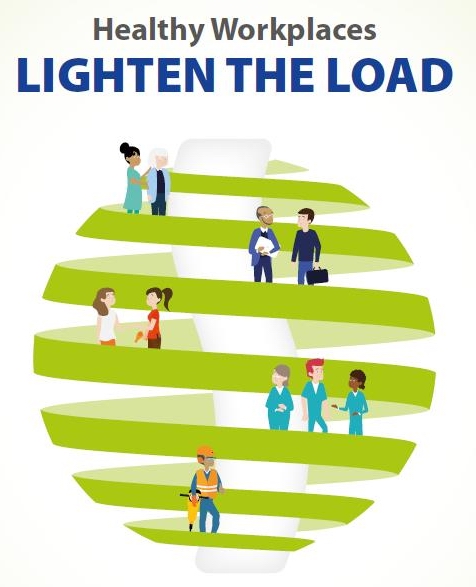 Millions of workers across Europe suffer from work-related musculoskeletal disorders (MSDs). About three in every five workers in the European Union report MSD complaints, based on data from the sixth European Working Conditions Survey. It makes it one of the most common work-related health problems and also cost employers huge amounts.
  The Senior Labour Inspectors’ Committee (SLIC) campaign 2020-2022 will focus on the topic: “Better enforcing requirements aiming to prevent exposures to risk factors causing musculoskeletal disorders (MSDs)”. The campaign will contribute to awareness raising, knowledge sharing, and the exchange of information, practices and experiences.
 The term musculoskeletal disorders (MSDs) covers any injury, damage or disorder of the joints or other tissues in the upper/lower limbs or the back. There are extensive resources available covering both prevention and the management of msd’s in the workplace.