PARTICIPATORY REDESIGN OF A PUBLIC PARK IN THE CITY OF NAPLES

Dr Erminia Attaianese Eu.Erg.
erminia.attaianese@unina.it

About ERGONOMICS PRACTICE EXAMPLES

The field of practice of professional ergonomists is very wide and covers all aspects concerning the health, well-being and productivity of people at work. Some ergonomic interventions concentrate on designing workplaces so that the work can be done comfortably and safely over a long period. Others look at the safety and ease of use of tools and computer interfaces. Others look at the organization of work systems to optimize workflow and avoid errors.

These papers do not cover all the areas of ergonomics practice, but they may be helpful for people looking for examples of how a professional ergonomist provides solutions for companies wanting to improve the efficiency of their workers without decreasing their safety, health, or well-being.

CONTRIBUTORS

The examples published here were contributed by European Ergonomists and reviewed by representatives from the Centre for Registration of European Ergonomics (CREE) and by the Federation of European Ergonomics Societies (FEES).

FFES Logo

If you are a certified ergonomist and wish to contribute, please get in touch with a member of the executive board of CREE or FEES. Contributions are welcome, and no fee is charged.

No posts found.

PARTICIPATORY (RE)DESIGN OF A SOFTWARE SYSTEM

Dr. Daniel Felix Eur.Erg.
http://www.easy-to-use.ch/

About ERGONOMICS PRACTICE EXAMPLES

The field of practice of professional ergonomists is very wide and covers all aspects concerning the health, well-being and productivity of people at work. Some ergonomic interventions concentrate on designing workplaces so that the work can be done comfortably and safely over a long period. Others look at the safety and ease of use of tools and computer interfaces. Others look at the organization of work systems to optimize workflow and avoid errors.

These papers do not cover all the areas of ergonomics practice, but they may be helpful for people looking for examples of how a professional ergonomist provides solutions for companies wanting to improve the efficiency of their workers without decreasing their safety, health, or well-being.

CONTRIBUTORS

The examples published here were contributed by European Ergonomists and reviewed by representatives from the Centre for Registration of European Ergonomics (CREE) and by the Federation of European Ergonomics Societies (FEES).

FFES Logo

If you are a certified ergonomist and wish to contribute, please get in touch with a member of the executive board of CREE or FEES. Contributions are welcome, and no fee is charged.

No posts found.

CEN PPE Sector forum and TC meetings

On behalf of the Federation of the European Ergonomics Societies Reinier Hoftijzer atteneded the CEN PPE Sector forum held in Brussels at 16th of February 2016 and CEN TC/122 WG 14 PPE and Ergonomics meetings in Zoetermeer (NL) last year, and on 21 and 22 of March in Brussels.

Ergonomics, safety and comfort are the three main considerations when designing new Personal Protective Equipment (PPE). PPE mean all the PPE may be worn for Occupational Health and Safety purposes, as well as sports or other recreational activities.

The PPE Sector Forum coordinates European standardization in the PPE field. At the meeting there were 20 persons attending from PPE Industry, PPE testing organization, National Standardization Bodies, CEN and the European Commission (DG Grow and DG Social Affairs and Employment). The role of FEES is to represent the ergonomic aspect of the design and the use of PPE.

The new PPE regulation in replacing the directive 89/686 was approved by the European Parliament on 20th January of 2016. The Council of the European Union adopted, on 12 February 2016, the comprise text on the proposal for Regulation of the European Parliament and of the Council on personal protective equipment and repealing Directive 1989/686/EEC. The next steps should be the signature of the text by the Dutch Presidency of the Council of the European Union and the President of the European Parliament. After approval in March there will be a transition period of two years.

Repetitive hand or arm movements are required in half of European workplaces

The European Agency for Safety and Health at Work (EU-OSHA) published its overview report of the second European Survey of Enterprises on New and Emerging Risks (ESENER-2), for which almost 50,000 establishments from 36 European countries were interviewed in 2014. The main topics covered are the management of occupational safety and health (OSH) in general, the management of psychosocial risks in particular and the participation of workers in OSH. 

The European Agency for Safety and Health at Work (EU-OSHA) published its overview report of the second European Survey of Enterprises on New and Emerging Risks (ESENER-2), for which almost 50,000 establishments from 36 European countries were interviewed in 2014. The main topics covered are the management of occupational safety and health (OSH) in general, the management of psychosocial risks in particular and the participation of workers in OSH. 

The levels of psychosocial risks in European workplaces are high, with 77 % of establishments reporting at least one psychosocial risk factor in the workplace. The most common is having to deal with difficult customers, patients, pupils, etc. (reported by 58 % of establishments), which is fairly closely followed by time pressures (reported by 43 %). In addition, ESENER-2 shows that 41 % of establishments in the EU-28 state that they indeed do not have enough information on how to assess psychosocial risks.
Furthermore, among all EU-28 establishments with 20 or more workers, 33 % report having in place an action plan to prevent work-related stress. This is most frequently reported by establishments in the United Kingdom (57 %) as well as in Romania, Denmark, Sweden and Italy (around 50 %). In contrast, less than 10 % of establishments in the Czech Republic and Estonia state that they have such an action plan in place.

Christa Sedlatschek highlighted ESENER-2’s findings on the importance of worker participation in managing OSH: ‘The second enterprise survey has confirmed the findings of the first: worker participation is vital in implementing safety and health measures at work — 85 % of establishments with formal employee representation carry out risk assessments, but this worryingly drops to only 64 % of establishments without such representation. It is also particularly important for workers to be involved in psychosocial risk management, as the very nature of these risks makes them difficult to talk about, making collaboration from all parties even more essential.’

The most commonly reported reason for addressing OSH in general is to fulfil legal obligations (reported by 85 % of establishments in the EU-28). Legislation is a key driver to address OSH at work, even though for some enterprises (around 40% in the EU) legal obligations are regarded to be a major difficulty when addressing health and safety. However, it is worth pointing out that there are significant country differences suggesting a very diverse perception on the complexity of legal obligations depending on the national context.

Links:

Factors leading to musculoskeletal disorders are reported very frequently across all activity sectors

According to ESENER-2, the 2nd most frequent risk factor is tiring or painful positions, including sitting for long periods, and the third is repetitive hand or arm movements.

According to ESENER-2, the 2nd most frequent risk factor is tiring or painful positions, including sitting for long periods, and the third is repetitive hand or arm movements.

The European Agency for Safety and Health at Work (EU-OSHA) launched the main findings of the Second European Survey of Enterprises on New and Emerging Risks (ESENER-2) at the European Parliament in Brussels. The results of the survey — which collected responses from almost 50,000 workplaces in 36 countries, including all 28 Member States — give a detailed insight into how occupational safety and health (OSH) risks are managed in Europe’s workplaces.

The most commonly reported risk factor is having to deal with difficult customers, patients, pupils and so on (58% of establishments in the EU-28), which in part reflects the continued growth of the service sector.

The rate of establishment where tiring or painful positions, including
sitting for long periods
are present, regardless of whether it is currently
under control and regardless of the number of employees it affects on the chart above.
To discover the survey go to https://osha.europa.eu

Report PPE Working group meeting April 2015.

The Federation of European
Ergonomics Societies
was represented at the Directive 89/686/EEC
Working group meeting in Brussels, 21 April 2015, by Reinier
Hoftijzer as member of the S&G working group.

The Federation of European
Ergonomics Societies
was represented at the Directive 89/686/EEC
Working group meeting in Brussels, 21 April 2015, by Reinier
Hoftijzer as member of the S&G working group.

To represent ergonomics in European
level is extremely important because the existing PPE Directive will
be replaced by a European PPE regulation. Besides up to date changes
in the legislation it also means that this new regulation has not to
be transformed into national legislation of the European Member
States. By the end of 2014 there was a common Council position. The
final voting in the European Parliament will very soon. It is
expected that the final decision between EU/Commission/Parliament and
final version agreement will be available before summer 2015. There
will be a transition period of at three years (2018).

The Federation of European
Ergonomics Societies
can give opinion regarding the part of the
guidelines concerning Ergonomics. All decisions regarding the new
guidelines have to be taken before the end of 2015.

On behalf of CEN there was also
announced that there will a new proposal for a horizontal TC
(Technical Committee) of CEN and CENELEC under Dutch secretariat
(NNI) about horizontal subjects regarding “Personal Protective
Ensembles and Systems” (also Ergonomics). Also under CEN TC 122
Ergonomics at the meeting in Prague (4 and 5 May) was a decision on a
new WG (Working group) “Ergonomics design and evaluation of
integrated PPE systems”, also under Dutch secretariat (NNI) and
Dutch convenor.

The next meeting will be on 17 November
2015.

wMSD is still a major concern

EU

Amongst current workers exposure to stress is considered one of the main health and safety risks they face in their workplace (53%). It was followed by ergonomic risks.
More than one quarter mention repetitive movements or tiring or painful positions (28%) while 24% mention lifting, carrying or moving loads on a daily basis.

EU

Amongst current workers exposure to stress is considered one of the main health and safety risks they face in their workplace (53%). It was followed by ergonomic risks.
More than one quarter mention repetitive movements or tiring or painful positions (28%) while 24% mention lifting, carrying or moving loads on a daily basis.

To access the full report on Working conditions go to http://ec.europa.eu/public_opinion/flash/fl_398_sum_en.pdf

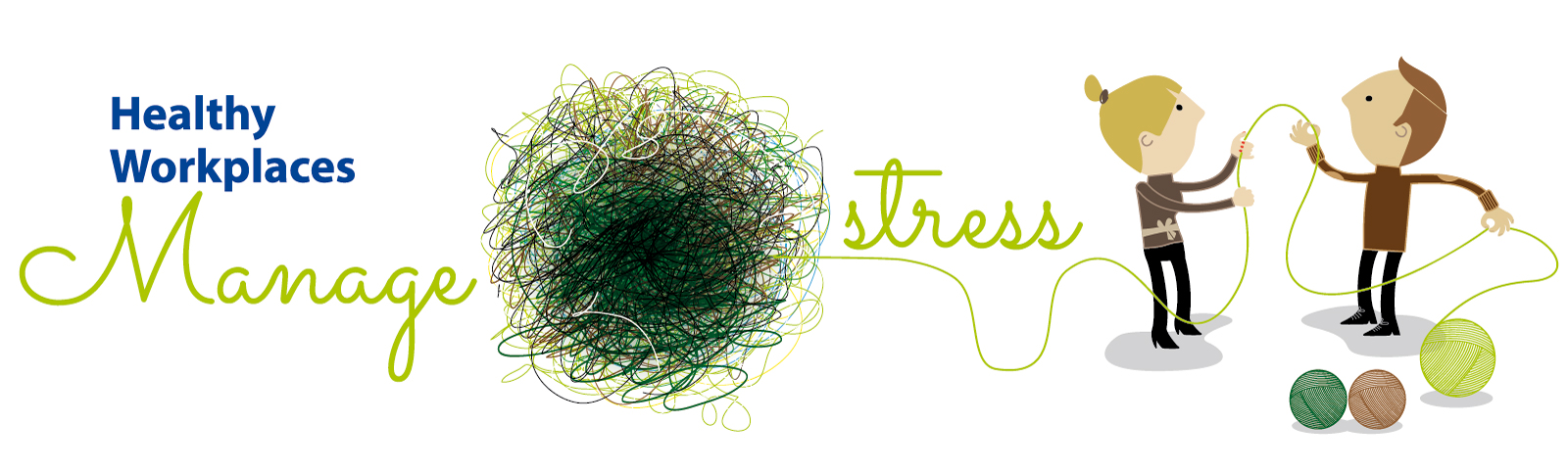
Healthy workplaces manage stress

The European Agency for Safety and Health at Work (EU-OSHA) launched a two year Europe-wide campaign: ‘Healthy Workplaces Manage Stress’.

Healthy Workplaces Manage Stress

The prevalence of work-related stress in Europe is startling.

The European Agency for Safety and Health at Work (EU-OSHA) launched a two year Europe-wide campaign: ‘Healthy Workplaces Manage Stress’.

Healthy Workplaces Manage Stress

The prevalence of work-related stress in Europe is startling. EU-OSHA’s latest pan-European opinion poll revealed that 51 % of workers find work-related stress to be common in their workplace and 4 in 10 workers think that stress is not handled well in their organisation. However, together employers and workers can successfully manage and prevent work-related stress and psychosocial risks; the Healthy Workplaces Campaign aims to help companies do just that. 

The Federation of European Ergonomics Societies encourages all federated societies to pay carefully attention to this campaign, and promote the importance of the contribution of ergonomics professionals in the reduction of the harm effect of work related stress.
As an official campaign partner, the Federation of European Ergonomics Societies dedicates its 2014 year Month of Ergonomics campaign to the prevention of work related stress.

Future of ergonomics in Europe

Future of ergonomics in Europe: from health and safety managment to sustainability development

FEES Session at the 50th Anniversary Congress of the SELF Ergonomics: Meeting society’s challenges
August 28-30, 2013
Paris1 University Panthéon – Sorbonne, Paris, France

Presentations

Future of ergonomics in Europe: from health and safety managment to sustainability development

FEES Session at the 50th Anniversary Congress of the SELF Ergonomics: Meeting society’s challenges
August 28-30, 2013
Paris1 University Panthéon – Sorbonne, Paris, France

Presentations

L’avenir de l’ergonomie en Europe : de la prise en charge de la santé sécurité au travail à l’implication dans une problématique de développement durable

Chair(s): Sylvain LEDUC (Aix-Marseille Université), Pascal ETIENNE (Ministère du Travail)

Dans le champ de la santé et de sécurité au travail, les principales contributions des ergonomes se sont focalisées sur la conception de systèmes de travail sûrs, avec des apports le plus souvent sous formes de normes techniques (formalisées dans le cadre du Comité Européen de normalisation – CEN, par exemple) et de guides pratiques d’aide à la conception de machines ou de lieux de travail. Ces contributions répondent à une demande sociale, le plus souvent médiatisée par des institutions européennes dans le cadre de campagnes de communication ou répondant à une exigence de régulation (p. ex. sur la question des troubles musculo-squelettiques ou bien des risques psycho-sociaux). Aujourd’hui, de nouvelles perspectives de recherche et d’intervention se font jour en ergonomie à partir des notions de prévention durable (notamment des troubles musculo-squelettiques), d’éco-design, d’intégration des préoccupations environnementales dans tout le cycle de vie d’un produit. L’ergonomie, qui est riche de concepts éprouvés permettant la conception de système de travail sûrs, est de plus en plus sollicitée pour contribuer à l’émergence de systèmes de travail et de vie permettant un usage responsable et respectueux de l’environnement. Dans ce cadre, de nombreuses interrogations apparaissent:

  • Comment passe-t-on d’une ergonomie de la prévention ciblée à ergonomie de la gestion anticipée des externalités du travail sur le facteur humain ?
  • Dans quelles conditions les concepts de base de l’ergonomie peuvent-ils contribuer –directement ou au prix de quelles adaptations – au développement durable?
  • Peut- on avoir comme perspective l’émergence d’une ergonomie du développement durable ou «éco – ergonomie»?

Presentations of the Symposium 

An analysis of the work-sustainability relationship and the contributions of activity ergonomics

Claudio Marcelo BRUNORO (Production Engineering Department of Universidade de São Paulo), Ivan BOLIS (Production Engineering Department of Universidade de São Paulo), Laerte Idal SZNELWAR (Production Engineering Department of Universidade de São Paulo), Natalia MANZONI (Production Engineering Department of Universidade de São Paulo), Bruno de Paula VICENTE (Production Engineering Department of Universidade de São Paulo), Luciano de FREITAS (Production Engineering Department of Universidade de São Paulo)

The aims of this exploratory study are 1) to identify work-sustainability relationship categories based on an analyzes of corporate sustainability reports, sustainability guidelines that consider work as a key issue (e.g. GRI, ISO, UN Global Compact, SA8000 and Ethos), and relevant documents from the United Nations and the International Labor Organization and 2) to highlight the contributions that the activity ergonomics approach can provide. As a result, under a activity ergonomics perspective, there are two major work-sustainability relationship categories: the work for sustainability and the sustainability of the work(er). In both categories activity ergonomics approach has significant contributions.
 

Usability for Sustainability: case study of a product-system for the tourist fruition of the cities of art

Emilio ROSSI (Università degli Studi ‘G. d’Annunzio’ Chieti e Pescara), Giuseppe DI BUCCHIANICO (Ergonomics for Sustainability Research Unit), Antonio MARANO (Ergonomics for Sustainability Research Unit)

Resuming the strategies and arguments of ergonomic design for Sustainability developed by the Ergonomics and Design for Sustainability Research Unit of the University of Chieti-Pescara, the paper reaffirms its applicative potentialities through the exposure of a recent experience of design research.
 

Ergonomic Development and Research in Hungary

Gyula SZABO (Hongrie)

Ergonomics is not blooming in Hungary regarding the recognition and attractiveness of the profession or the position of the professional organisations, such as the Hungarian Ergonomics Society.
This paper describes the past and present of the Hungarian ergonomics profession. Campaigns “Let’s drink (water) Judith’s health”, “The Office Chair of the Year” and “E2O – Solicitation of Ideas in Ergonomics” are presented. Among the activities of MET some regular events, promotional and communication materials, international and national responsibilities are described.
The paper ends with the summary of some ergonomic research projects in Hungary including cognitive, workplace rehabilitation research projects.
 

Building Sustainable Human-Centered Complex Systems

Waldemar KARWOWSKI (1 Institute for Advanced Systems Engineering), Tareq AHRAM (1 Institute for Advanced Systems Engineering), Ben AMABA (IBM Complex Systems – Rational Software)

Given the most competitive nature of global business environment, effective engineering innovation and leadership is a critical requirement for all levels of product or systems lifecycle development. Sustainability of workforce and engineering competence skills are extremely important due to a general shortage of engineering talent and the need for mobility of highly trained professionals.  This paper provides a motivation and quest for sustainable human factors and ergonomics (HF/E) approach in complex systems design and development.  The considerable advancements achieved in complex systems engineering indicate that the adaptation of sustainable HF/E can lead to highly sophisticated yet widely useable collaborative applications in order to ensure sustainability of limited resources such as energy and clean water. The sustainable HF/E in complex systems design proves critical in maintaining skills needed in future capable workforce.
 

Human Factors and Sustainable Development: a German Perspective

Klaus J. ZINK (Institut für Technologie und Arbeit)

The anthropocentric definition of sustainable development by the World Commission on Environment and Development (WCED) in 1987 leads to joint objectives between Human Factors/Ergonomics (HF/E) and sustainable development. 
From a German perspective one has to differentiate between developments in science especially in human factors/ergonomics and related disciplines and the situation in German companies. As one example respective activities of the German Human Factors and Ergonomics Society (Gesellschaft für Arbeitswissenschaft, GfA)) and its members, but also publications of non-members have to be considered. 
The analysis of the development in German companies is focused on their corporate social responsibility (CSR) reports and their development during the last years. Of course, the social dimension described in these reports is of specific importance. In addition recent studies regarding working conditions in Germany have to be discussed. As sustainable working conditions are also referred to (international) supply chains this aspect will be included.
The paper ends with a summarizing evaluation of the situation in Germany.

Prevention of Work Accidents due to Slips and Trips on the Same Level

Campaign for the Prevention of Work Accidents due to Slips and Trips on the Same Level 2014

The Senior Labour Inspectors Committee (SLIC) has decided to conduct a campaign on slips and trips on the same level in 2014.

The goal of the campaign is to prevent accidents and injuries caused by slips and trips. The campaign is aimed at the following economic sectors:

  • food production;
  • metal-working;
  • health care;
  • HoReCa (hotels, restaurants, catering);
  • retail, wholesale (storage).

Campaign for the Prevention of Work Accidents due to Slips and Trips on the Same Level 2014

The Senior Labour Inspectors Committee (SLIC) has decided to conduct a campaign on slips and trips on the same level in 2014.

The goal of the campaign is to prevent accidents and injuries caused by slips and trips. The campaign is aimed at the following economic sectors:

  • food production;
  • metal-working;
  • health care;
  • HoReCa (hotels, restaurants, catering);
  • retail, wholesale (storage).