18th Annual Applied Ergonomics Conference

March 16 – 19, 2015
Nashville, Tennessee

Annual Applied Ergonomics Conference (AEC) 2014

This conference will provide you with an opportunity to:

March 16 – 19, 2015
Nashville, Tennessee

Annual Applied Ergonomics Conference (AEC) 2014

This conference will provide you with an opportunity to:

  • Attend multidisciplinary educational sessions for all experience levels.
  • Expand your knowledge of crucial topics affecting the ergonomics community.
    Join in on the roundtable discussions and share opinions, strategies, new initiatives and brainstorm on various topics.
  • Come early and attend one or two of the interactive pre-conference workshops.
  • Earn Continuing education Units (CEUs) and Professional Development Hours (PDHs).

EU-OSHA Campaign Partner Benchmarking Event

In the context of the “Healthy Workplaces Campaign 2014-2015” a partnership meeting about “Leadership training and OSH competence of all responsible actors” was held on 2th of July 2014 in Amsterdam.

In the context of the “Healthy Workplaces Campaign 2014-2015” a partnership meeting about “Leadership training and OSH competence of all responsible actors” was held on 2th of July 2014 in Amsterdam.

There were about 60 participants at this meeting organised and hosted by Heineken. FEES as an official campaign partner was represented by R. Hoftijzer, treasurer of the Federation of the European Ergonomics Societies. Healthy Workplaces Manage Stress

After the opening by Herbert Schilthuis, Global Health & Safety Director of Heineken, there was a presentation of Dr. Christa Sedlatschek, EU-agency OSHA director, about the new EU-OSHA campaign 2014-2015 “Healthy workplaces Manage Stress”. There were also two presentation about the Heineken leadership program on OSH.

After the break there were several presentations about “Winning through safety panel”. The subjects were:

  • Leadership drives safety behaviours
  • Leader as safety role model
  • Safety competence in Heineken
  • Work stress –best practices.

The last session was about “OHS competences and Leadership training – Best practices panel”. There several presentation about:

  • The case of Toyota by Patrick Hertsenberg, Managing Director of Toyota Nederland
  • The case of Delphi by Fernando Lopes, Manager of Delphi Powertrain EH&S
  • The case of Baxter by Andrew Bowers, EHS and sustainability Director Baxter
  • The case of European Virtual Institute for Integrated Risk Management by Oliver Salvi, General Manager
  • The case of Ideal Standard by David Tjong, EHS Director Ideal Standard

This partnership meeting shows what companies can do to promote H&S at work with the possibility to understand the role of ergonomics in the reduction of work-related stress.

Action Points 2014 August

Action points adopted by the FEES COUNCIL July 20th 2014

Yes, this is a very short version, but I hope you can use this list as a reminder or a check list. We believe that the following actions will advance both the federation and all member societies:

Action points adopted by the FEES COUNCIL July 20th 2014

Yes, this is a very short version, but I hope you can use this list as a reminder or a check list. We believe that the following actions will advance both the federation and all member societies:

  • Distribute the FEES bookmark – request additional copies from C&P Standing Committee
  • To send ergonomics-related information in order to improve the content of the website and to allow to issue a newsletter
  • European Month of Ergonomics

    • To send remarks to presentation
    • To set up links between the websites : FEES / CREE / OSHA
    • To update the websites
    • Ask for endorsement of conferences
    • To organize events to celebrate EME.
    • To become partners of EU- OSHA focal points.
  • Use website RSS feed on your website
  • Use FEES Calendar on your website
  • In relation to IEA 2018 Congress – set up national initiatives on creativity in practice in 2014 and 2015
  • Develop links between FEES and Ergomach
  • Discuss FEES – CREE collaboration
  • To express concerns about UK FEES membership
  • Next Council meeting in 2015 – Proposals to be made on :

    • Location, date of the FEES council meeting and associated event
    • Candidates for the President and the Secretary General positions
  • Organize debates at national level on the name of IEA : “Ergonomics” or “Ergonomics and Human Factors”

Information on the FEES COUNCIL meeting held on July 20th, 2014

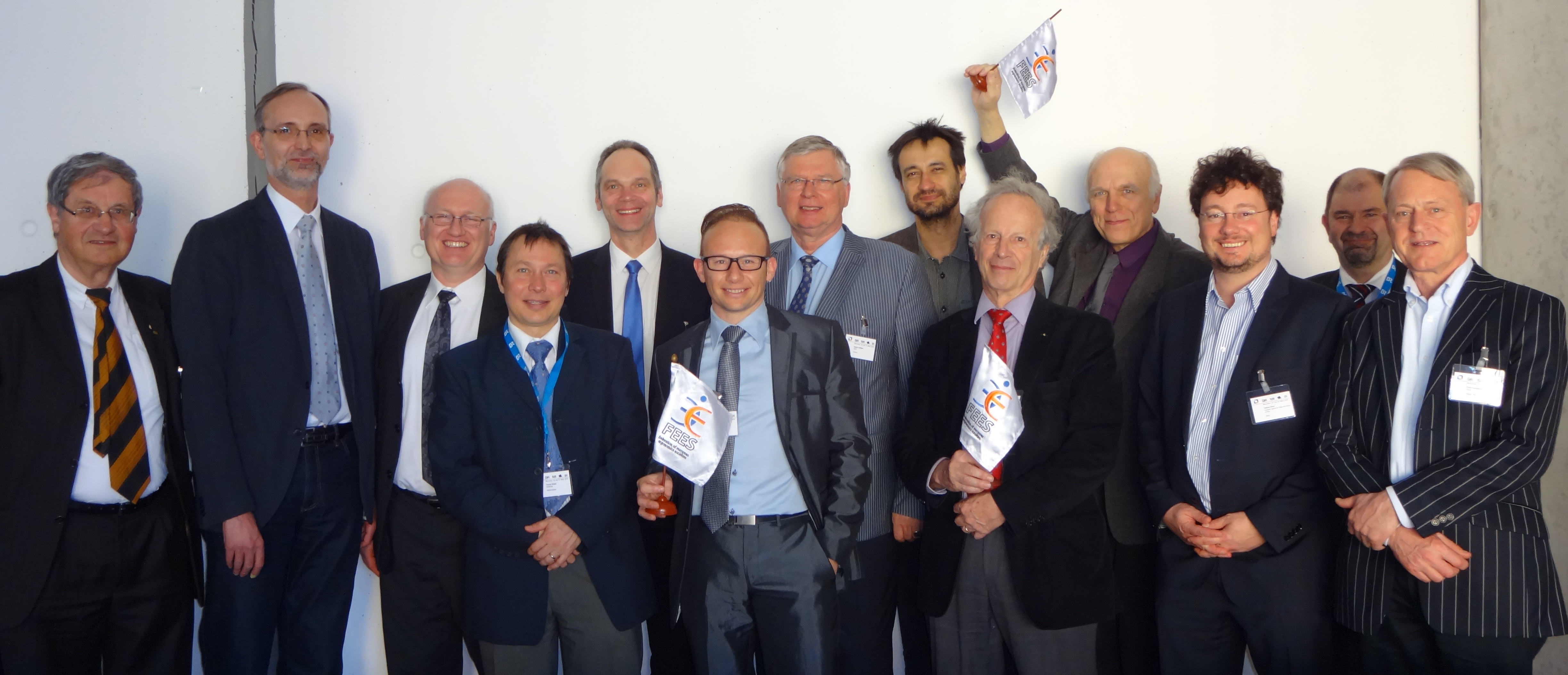
At the recent council meeting of the Federation of the European Ergonomics Societies (FEES), hosted in Krakow with the support of the Polish Ergonomics Society, 15 delegates from 11 European ergonomic societies were present (coming from Austria, Finland, France, Hungary, Italy, Latvia, The Netherlands, Poland, Portugal, Russia and Switzerland).

FFES Logo

At the recent council meeting of the Federation of the European Ergonomics Societies (FEES), hosted in Krakow with the support of the Polish Ergonomics Society, 15 delegates from 11 European ergonomic societies were present (coming from Austria, Finland, France, Hungary, Italy, Latvia, The Netherlands, Poland, Portugal, Russia and Switzerland).

FFES Logo

Representatives from CREE and the Ergomach working group also attended. The Austrian ergonomics society was welcomed as new member of FEES. The treasurer, Reinier Hoftizjer was re-elected and a newly published FEES bookmark was distributed.

Several debates took place in the Council meeting:

  • How to improve the exchange of information between the member societies?
  • How to improve the cooperation with bodies acting at the European level, such as
    • the Centre for Registration of European Ergonomists (CREE),
    • Ergomach working group in support of the implementation of the European Ergonomics and Machinery Directive) and
    • EU institutions, particularly EU-OSHA and the standardisation bodies?

Initiatives were agreed to reinforce the collaboration between the member societies:

  • These extended from the improved linking between the websites (FEES / CREE / EU-OSHA / Ergomach), to the
  • organization of events to celebrate the European Month of Ergonomics (EME), and
  • the organization of seminars at national and European level in order to prepare the IEA Congress on “Creativity in Practice”, which will be held in Florence, Italy in 2018 and organised by the Italian ergonomics Society – SIE.

Additionally, the CREE made some proposals for future collaborative projects with the aim of fostering the development of the ergonomics profession in Europe: These include establishing quality criteria for publishing case studies, providing information about ergonomics education and training in Europe and providing more support for newer societies in the form of experience exchanges. The idea of a “think-tank” for the future of the profession was also proposed.

The FEES Council had also a first discussion on the issue of a possible name change: “Ergonomics” or “Ergonomics and Human Factors” but there was no consensus amongst the participants.

IEA2015 Call for abstracts open

IEA2015

19thTriennial Congress of the International Ergonomics Association (IEA 2015) to be held from 9-14 August 2015 at the Melbourne Convention & Exhibition Centre.
Don’t forget to submit your abstract by 30 November 2014

MORE IMPORTANT DATES

IEA2015

19thTriennial Congress of the International Ergonomics Association (IEA 2015) to be held from 9-14 August 2015 at the Melbourne Convention & Exhibition Centre.
Don’t forget to submit your abstract by 30 November 2014

MORE IMPORTANT DATES

  • 23 Januray 2015
    Completion of abstract review process; individual feedback, general instructions on full paper completion and submission sent to authors
  • 6 March 2015
    Deadline for submitting full paper
  • 12 February 2015
    Registration open
  • 1 May 2015
    Full paper reviewing and revisions completed, all notifications of acceptance sent.
  • 30 May 2015
    Earlybird registration deadline Camera-ready full paper deadline

20th Triennial Congress of the International Ergonomics Association (IEA)

IEA2018 The 20th Triennial Congress of the International Ergonomics Association (IEA) will be held in Firenze from 25 August to 1 Sep

IEA2018 The 20th Triennial Congress of the International Ergonomics Association (IEA) will be held in Firenze from 25 August to 1 September 2018.

16th International Conference on Human-Computer Interaction

HCI International 2014
22 – 27 June 2014, Creta Maris, Heraklion, Crete, Greece
HCI International 2014, jointly with the affiliated Conferences, which are held under one management and one registration, invite you to Crete, Greece, to participate and contribute to the international forum for the dissemination and exchange of up-to-date scientific information on theoretical, generic and applied areas of HCI, through the following modes of communication: Plenary / Keynote Presentation, Parallel Sessions, Poster Sessions, Tutorials and Exhibition.
The Conference will start with three days of Tutorials (22-24 June). Parallel Sessions, Poster Sessions and the Exhibition will be held during the last three days of the Conference (25-27 June).

The Conference will start with three days of Tutorials (22-24 June). Parallel Sessions, Poster Sessions and the Exhibition will be held during the last three days of the Conference (25-27 June).

thematic areas:

affiliated conferences:

European Conference on Applied Ergonomics

The European Conference on Applied Ergonomics was a joint event of the Hungarian Ergonomic Society and the Ergonomics Sub-committee of the Hungarian Academy of Sciences at 30th
May, 2013, Budapest. 

The conference was endorsed by the Federation of European Ergonomic Societies.

Program chair: Gyula Szabó

Program and presentations to download:

The European Conference on Applied Ergonomics was a joint event of the Hungarian Ergonomic Society and the Ergonomics Sub-committee of the Hungarian Academy of Sciences at 30th
May, 2013, Budapest. 

The conference was endorsed by the Federation of European Ergonomic Societies.

Program chair: Gyula Szabó

Program and presentations to download:

Organisers

  • Maggie Graf, Centre for Registration of European Ergonomists (CREE)
  • Lajos Izsó, Budapest University of Technology and Economics
  • Sándor Horváth, Óbuda University
  • György Kaucsek, Hungarian Ergonomic Society
  • Sylvain Leduc, Federation of European Ergonomic Societies
  • József Varga, Hungarian Academy of Sciences

Citation: European Conference on Applied Ergonomics 2013, 30 May 2013, Budapest. ergonomics-fees.eu

The event was hosted by the Óbuda University, Bánki Donát Faculty of Mechanical and Safety Engineering and by Centre for Registration of European Ergonomists.

10th Anniversary of the Federation of the European Ergonomics Societies

The 10th Anniversary of the Federation of the European Ergonomics Societies was celebrated at the GfA 60th Annual Congress in Munich 13-14 March 2014. 

FFES at 10th

Sessions organised by the Federation of the European Ergonomics Societies:

The 10th Anniversary of the Federation of the European Ergonomics Societies was celebrated at the GfA 60th Annual Congress in Munich 13-14 March 2014. 

FFES at 10th

Sessions organised by the Federation of the European Ergonomics Societies:

10 years anniversary of FEES

Ergonomic challenges

Results of Cooperation

FEES 10th year

Future of ergonomics in Europe

Future of ergonomics in Europe: from health and safety managment to sustainability development

FEES Session at the 50th Anniversary Congress of the SELF Ergonomics: Meeting society’s challenges
August 28-30, 2013
Paris1 University Panthéon – Sorbonne, Paris, France

Presentations

Future of ergonomics in Europe: from health and safety managment to sustainability development

FEES Session at the 50th Anniversary Congress of the SELF Ergonomics: Meeting society’s challenges
August 28-30, 2013
Paris1 University Panthéon – Sorbonne, Paris, France

Presentations

L’avenir de l’ergonomie en Europe : de la prise en charge de la santé sécurité au travail à l’implication dans une problématique de développement durable

Chair(s): Sylvain LEDUC (Aix-Marseille Université), Pascal ETIENNE (Ministère du Travail)

Dans le champ de la santé et de sécurité au travail, les principales contributions des ergonomes se sont focalisées sur la conception de systèmes de travail sûrs, avec des apports le plus souvent sous formes de normes techniques (formalisées dans le cadre du Comité Européen de normalisation – CEN, par exemple) et de guides pratiques d’aide à la conception de machines ou de lieux de travail. Ces contributions répondent à une demande sociale, le plus souvent médiatisée par des institutions européennes dans le cadre de campagnes de communication ou répondant à une exigence de régulation (p. ex. sur la question des troubles musculo-squelettiques ou bien des risques psycho-sociaux). Aujourd’hui, de nouvelles perspectives de recherche et d’intervention se font jour en ergonomie à partir des notions de prévention durable (notamment des troubles musculo-squelettiques), d’éco-design, d’intégration des préoccupations environnementales dans tout le cycle de vie d’un produit. L’ergonomie, qui est riche de concepts éprouvés permettant la conception de système de travail sûrs, est de plus en plus sollicitée pour contribuer à l’émergence de systèmes de travail et de vie permettant un usage responsable et respectueux de l’environnement. Dans ce cadre, de nombreuses interrogations apparaissent:

  • Comment passe-t-on d’une ergonomie de la prévention ciblée à ergonomie de la gestion anticipée des externalités du travail sur le facteur humain ?
  • Dans quelles conditions les concepts de base de l’ergonomie peuvent-ils contribuer –directement ou au prix de quelles adaptations – au développement durable?
  • Peut- on avoir comme perspective l’émergence d’une ergonomie du développement durable ou «éco – ergonomie»?

Presentations of the Symposium 

An analysis of the work-sustainability relationship and the contributions of activity ergonomics

Claudio Marcelo BRUNORO (Production Engineering Department of Universidade de São Paulo), Ivan BOLIS (Production Engineering Department of Universidade de São Paulo), Laerte Idal SZNELWAR (Production Engineering Department of Universidade de São Paulo), Natalia MANZONI (Production Engineering Department of Universidade de São Paulo), Bruno de Paula VICENTE (Production Engineering Department of Universidade de São Paulo), Luciano de FREITAS (Production Engineering Department of Universidade de São Paulo)

The aims of this exploratory study are 1) to identify work-sustainability relationship categories based on an analyzes of corporate sustainability reports, sustainability guidelines that consider work as a key issue (e.g. GRI, ISO, UN Global Compact, SA8000 and Ethos), and relevant documents from the United Nations and the International Labor Organization and 2) to highlight the contributions that the activity ergonomics approach can provide. As a result, under a activity ergonomics perspective, there are two major work-sustainability relationship categories: the work for sustainability and the sustainability of the work(er). In both categories activity ergonomics approach has significant contributions.
 

Usability for Sustainability: case study of a product-system for the tourist fruition of the cities of art

Emilio ROSSI (Università degli Studi ‘G. d’Annunzio’ Chieti e Pescara), Giuseppe DI BUCCHIANICO (Ergonomics for Sustainability Research Unit), Antonio MARANO (Ergonomics for Sustainability Research Unit)

Resuming the strategies and arguments of ergonomic design for Sustainability developed by the Ergonomics and Design for Sustainability Research Unit of the University of Chieti-Pescara, the paper reaffirms its applicative potentialities through the exposure of a recent experience of design research.
 

Ergonomic Development and Research in Hungary

Gyula SZABO (Hongrie)

Ergonomics is not blooming in Hungary regarding the recognition and attractiveness of the profession or the position of the professional organisations, such as the Hungarian Ergonomics Society.
This paper describes the past and present of the Hungarian ergonomics profession. Campaigns “Let’s drink (water) Judith’s health”, “The Office Chair of the Year” and “E2O – Solicitation of Ideas in Ergonomics” are presented. Among the activities of MET some regular events, promotional and communication materials, international and national responsibilities are described.
The paper ends with the summary of some ergonomic research projects in Hungary including cognitive, workplace rehabilitation research projects.
 

Building Sustainable Human-Centered Complex Systems

Waldemar KARWOWSKI (1 Institute for Advanced Systems Engineering), Tareq AHRAM (1 Institute for Advanced Systems Engineering), Ben AMABA (IBM Complex Systems – Rational Software)

Given the most competitive nature of global business environment, effective engineering innovation and leadership is a critical requirement for all levels of product or systems lifecycle development. Sustainability of workforce and engineering competence skills are extremely important due to a general shortage of engineering talent and the need for mobility of highly trained professionals.  This paper provides a motivation and quest for sustainable human factors and ergonomics (HF/E) approach in complex systems design and development.  The considerable advancements achieved in complex systems engineering indicate that the adaptation of sustainable HF/E can lead to highly sophisticated yet widely useable collaborative applications in order to ensure sustainability of limited resources such as energy and clean water. The sustainable HF/E in complex systems design proves critical in maintaining skills needed in future capable workforce.
 

Human Factors and Sustainable Development: a German Perspective

Klaus J. ZINK (Institut für Technologie und Arbeit)

The anthropocentric definition of sustainable development by the World Commission on Environment and Development (WCED) in 1987 leads to joint objectives between Human Factors/Ergonomics (HF/E) and sustainable development. 
From a German perspective one has to differentiate between developments in science especially in human factors/ergonomics and related disciplines and the situation in German companies. As one example respective activities of the German Human Factors and Ergonomics Society (Gesellschaft für Arbeitswissenschaft, GfA)) and its members, but also publications of non-members have to be considered. 
The analysis of the development in German companies is focused on their corporate social responsibility (CSR) reports and their development during the last years. Of course, the social dimension described in these reports is of specific importance. In addition recent studies regarding working conditions in Germany have to be discussed. As sustainable working conditions are also referred to (international) supply chains this aspect will be included.
The paper ends with a summarizing evaluation of the situation in Germany.