Report on the IEA, CREE and FEES workshop held in Zadar, Croatia

On the 15th of June 2018 the Croatian Ergonomics Society hosted a collaborative workshop on “building towards sustainable Human Factors and Ergonomics Societies in Europe”, during the 7th International Ergonomic Conference ERGONOMICS 2018 – Emphasis on Wellbeing. 

On the 15th of June 2018 the Croatian Ergonomics Society hosted a collaborative workshop on “building towards sustainable Human Factors and Ergonomics Societies in Europe”, during the 7th International Ergonomic Conference ERGONOMICS 2018 – Emphasis on Wellbeing. 

This year more than 70 papers had been submitted, and after the review process, 50 papers were presented at the Conference in oral or poster sessions, and the presented papers have been published in the Conference Book of Proceedings. The participants came from the following countries: Austria, Canada, Croatia, Brazil, Germany, Greece, Hungary, India, Indonesia, Iran, Nigeria, Mexico, Poland, Portugal, Romania, Republic of Korea, Russian Federation, Slovenia, South Africa, Switzerland, Taiwan ROC and the USA.

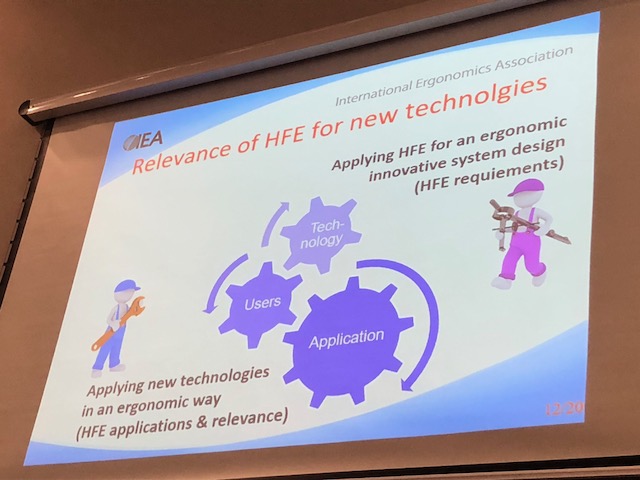
The workshop was a collaboration between the International Ergonomics Association (IEA), Federation of European Ergonomics Societies (FEES) and Centre for Registration of European Ergonomists (CREE). The purpose of the workshop was to provide an introduction to systems tools and methods that can be used to develop an understanding of the current constraints and flows on the development of human factors and ergonomics in Eastern Europe and then secondly to propose a way forward using the IEA general framework model for development. IEA
The workshop was a landmark event for the international ergonomics community as it was the first effort at collaboration between the IEA, FEES and CREE to support international development. As such it was an important occasion for building a common understanding of the needs and constraints within Europe and more specifically Eastern Europe.

The workshop was formulated and presented by members from all three participating organisations:

  • IEA: Jose Orlando Gomes (Vice-president treasurer); Andrew Todd (International development standing committee chair)
  • FEES: Gyula Szabó (Communications and promotion committee chair)
  • CREE: Maggie Graf (Development Officer)

There was a good participation at the workshop with the members of the Croatian Ergonomics Society executive board all attending the workshop. Further there were participants from Austria, Hungry, Poland, Slovenia, and Russia at the workshop.

The workshop involved contextualization from the IEA and FEES before CREE provided very useful insights into a) the importance of certification and b) the process of building certification boards. This was followed by a session addressing the purpose of ergonomics societies and how to align society activities with the aforementioned purposes. This was facilitated through the use of cognitive work analysis to emphasise the importance of using ergonomics systemic tools for supporting our own development. This resulted in robust discussions on how to build sustainable relationships in the region. An important outcome of which was a shared vision for building towards a region conference in 2020.

There were some important lessons learnt during the workshop and ideas on how to ensure that the workshop can add even more value in the future shared. It was clear that such workshops with networks and federated societies can be of tremendous value in the future and should be part of the IEA development strategy going beyond the IEA triennial congress in Florence in August 2018.
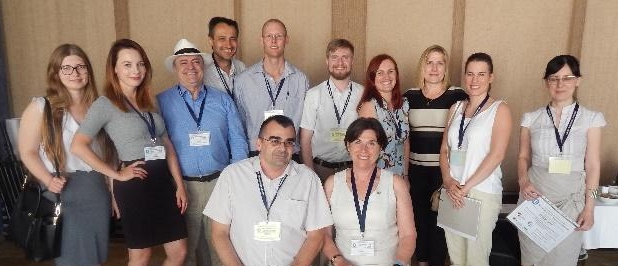
attendees at Zadar 2018

Some of the attendees at the workshop

Sustaining membership

To support the activities of the Federation of the European Ergonomics Societies it is possible to become a sustaining member of FEES. Sustaining membership is both possible for organisations/companies and individual persons.

Supporting FEES can be divided in two different groups:

To support the activities of the Federation of the European Ergonomics Societies it is possible to become a sustaining member of FEES. Sustaining membership is both possible for organisations/companies and individual persons.

Supporting FEES can be divided in two different groups:

  • Sustaining membership
  • Supporting organisations and persons

Interested in sustaining membership? Read the summary below or the treasurer of FEES can also give answers to questions about sustaining membership (treasurer@ergonomics-fees.eu).

A. Sustaining Membership

Sustaining members are Organisations and Individual persons that demonstrate their commitment to the Federation of European Ergonomics Societies by providing an annual financial support.

Sustaining members are divided into three groups:

  • Organisations with more than one employee
  • Organisations of one person
  • Individual membership

For these three groups the metal status gives the different benefits. The metal status is:

  • Bronze
  • Silver
  • Gold

1. Organisations with more than one employee

The benefits for this membership are:

  • Bronze:
    • To attend the FEES Council meeting (no voting rights).
    • To publicize the organisation’s name and logo on a special page in the FEES flyer.
    • To publicize the organisation’s name and logo in a specific part of the FEES website.
    • To use the FEES logo on the organisation’s website.
    • To be mentioned in the FEES Annual Report.
  • Silver: all benefits as under Bronze, plus
    • To present written information about the member’s organisation in the annual Council meeting of FEES.
    • To promote the name and logo of the member’s organisation at FEES related meetings.
  • Gold: all benefits as under Silver, plus
    • To present written and oral information about the member’s organisation in the annual Council meeting of FEES.
    • To become offered exposure facilities at FEES organised meetings.
    • To mention scientific based activities on FEES website annual calendar.

The annual payment for this membership is:

  • Bronze € 1000,-
  • Silver € 2500,-
  • Gold € 5000,-

2. Organisations of one person

The sustaining membership for companies with only one working person is also indicated by a metal status and the same benefits as the sustaining members but the annual contribution is lower. These are:

  • Bronze € 500,-
  • Silver € 1000,-
  • Gold € 2000,-

3. Individual membership

The benefits offered by the Federation of the European Ergonomics Societies for the sustaining individual membership for the different metal status are:

  • To attend the FEES Council meeting (no voting rights).
  • To use the FEES logo on the personal website.
  • To be mentioned in the FEES Annual Report.
  • To publicize the individual name on a special page in the FEES flyer.
  • To publicize the individual name with hyperlink in a specific part of the FEES website.
  • The possibility to attend FEES endorsed conferences on a reduced price.

The sustaining individual membership is intended for individual persons for a period of at least one year. The basic annual contribution will be € 150,-.

B. Supporting Organizations and Persons

By supporting the Federation of the European Ergonomics Societies substantially in a material way – and so indirectly in a financial way – organisations or persons can become supporting organisations or persons on annual basis. Benefits for supporting organizations and persons are:

  • To publicize the organisation’s name and logo on a special page in the FEES flyer.
  • To publicize the organisation’s name and logo in a specific part of the FEES website.
  • To be mentioned in the FEES Annual Report.

Interested in sustaining membership? Apply for sustaining membership today! Contact the treasurer of the Federation of the European Ergonomics Societies now: treasurer@ergonomics-fees.eu

The world(s) of work in transition ETUI-ETUC conference

ETUI jobs

Pascal Etienne, secretary general of the Federation of the European Ergonomics Societies (FEES) attended for a part the three days conference organized at the end of June by the European trade unions (E

ETUI jobs

Pascal Etienne, secretary general of the Federation of the European Ergonomics Societies (FEES) attended for a part the three days conference organized at the end of June by the European trade unions (ETUI and ETUC) in Brussels on the issue the world(s) of work in transition.

During the plenary sessions a lot of prominent speakers representing European and global institutions, such as Ministers from Greece or Bulgaria, EU Commissioners, EU MPs, Trade Union Secretaries from the International Trade Union Confederation or the European Trade Union Confederation, the International Labour Organization and academics depicted the future of the EU in a globalized world and the main trends of the future of work. The speeches were coined by the present difficulties in the building of a European frame and its consequences on the work and the labour relations.

The current economic growth model based on constantly rising GDP and an environmental dead end was questioned. In his presentation, for example, the former Director of the World Trade Organization and EU official, Pascal Lamy, stressed that we tend to a “European globalization” in which the European social model (with namely less inequality, social rights and human rights) is part of a “European brand”. The challenge is now to face the greening and the digitalization of the economy. But the session showed as well strong debates on such proposals, some panelists discussing the statement of a European model present in all the EU countries.

In another panel on the issue “a new economic approach: how to fix the shortcomings of the current economic model?” Enrico Giovannini, professor at the Rome University, presented the results of his findings with the necessity to consider the workers as an asset and not a cost, which implies to change the accountability rules. He mentioned as well as resources the results of the ESPAS (European Strategy and Policy Analysis System) conference held in Brussels in November 2017.

FEES remarked two interesting workshops

The role of worker’s participation in addressing the digitalization driven Europeanisation strategies of Multinational Companies (MNCs)

In the workshop, European employers, experts and Works Council representatives presented how MNCs currently shape and have been shaped by the two trends of digitalization and globalization, following a two-step strategy of both stretching and bundling up. “Stretching” refers to company strategies to grow bigger, more digital, and more international through expansion, mergers, and acquisitions, both within and across industries, a process powered by an accelerated implementation of information and communication technology. The subsequent ‘bundling up’ processes manifest themselves in various trends of cross-border standardization and centralization. Both of these processes result in a profound shift in the arenas for workers participation. In an interactive process framed by the results of an overview study about the key trends shaping MNCs strategies, the workshop participants have shared the specific perspectives on these challenges from the point of view of industry, companies and trade unions.

Workshop on the impact of automation on working conditions, health and safety

In this workshop, trade unionist and experts explained how technological developments could be great opportunities to improve the design of safe and healthy working places. Automation impacts both social and economic patterns and makes it necessary to explore the interface between people, machines and processes from a wide range of perspectives. How to deal with the high demands on workers in terms of cognitive abilities, complex decision-making mechanisms, unfamiliarity with (hidden) events and the ramifications of a lack of situational-awareness potentially associated with automation. The very concrete presentations of the panel aimed to understand the territory where designers, employers and workers can look at automation by sharing the respective requirements, concerns and limitations in an attempt to formulate recommendations to promote successful coexistence of automation and workers safety and health. In the debate, the opportunities presented by the implementation of the EU machines directive requirements articulated with the risk assessment requirements of the “OHS framework” directive as a design and feedback process were stressed.

More information on the conference is available on the conference webpage: https://www.etui.org/Events/ETUC-ETUI-conference-The-World-s-of-Work-in-Transition

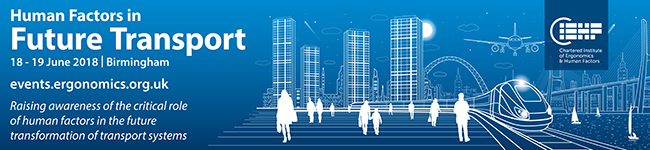
Human Factors in Future Transport

IEHFThe Chartered Institute of Ergonomics and Human Factors is organising events answering the most recent safety related issues.

Human Factors in Future Transport

18 – 19 June 2018
Birmingham

IEHFThe Chartered Institute of Ergonomics and Human Factors is organising events answering the most recent safety related issues.

Human Factors in Future Transport

18 – 19 June 2018
Birmingham

This event will highlight the issues of people coherently using multiple services to reach destinations and identify the issues around the integration of different multi-modal transport systems using the same space. We will raise awareness that many discussions taking place about transport systems today involve human factors issues and that we have the expertise to contribute and to provide solutions.

Human Factors in Future Transport

Featuring talks, posters, panel sessions, debates and discussions, on the following themes common across all transport sectors:

  • Transformation of mobility: What could the future of transport look like and how will it effect commuting patterns and where people live?
  • Autonomy: How can human factors enhance the development of autonomous transport solutions?
  • Accessibility: How can we ensure future transport solutions don’t leave us stranded (in the widest sense of people, communities, industry sectors, regions)?
  • Behaviour, acceptance and ethics: How can we ensure future transport is sustainable in terms of power generation, air quality, climate change and waste management?
  • Design: How do we ensure integrated transport systems are based around human-centred design?
  • Big data: How will we integrate distributed data from multi-model transport systems and provide an holistic view for strategic planning and real-time monitoring?
  • Talks from: Transport for London, Transport Systems Catapult, University of Nottingham, QinetiQ, Coventry University, Rail Safety and Standards Board, Brunel University, University of Central Florida, Monash University and Arup

See the full programme and all details about how to book at http://events.ergonomics.org.uk/event/human-factors-in-future-transport/

Endorsed by FEES

This event is endorsed by the Federation of European Ergonomics Societies. FEES members are welcome to attend this event at a 20% discount off standard delegate rates. Use code FEES20 to obtain your discount when you register.

ERGONOMICS – CREATIVITY AND INNOVATIVITY, GOOD PRACTICE

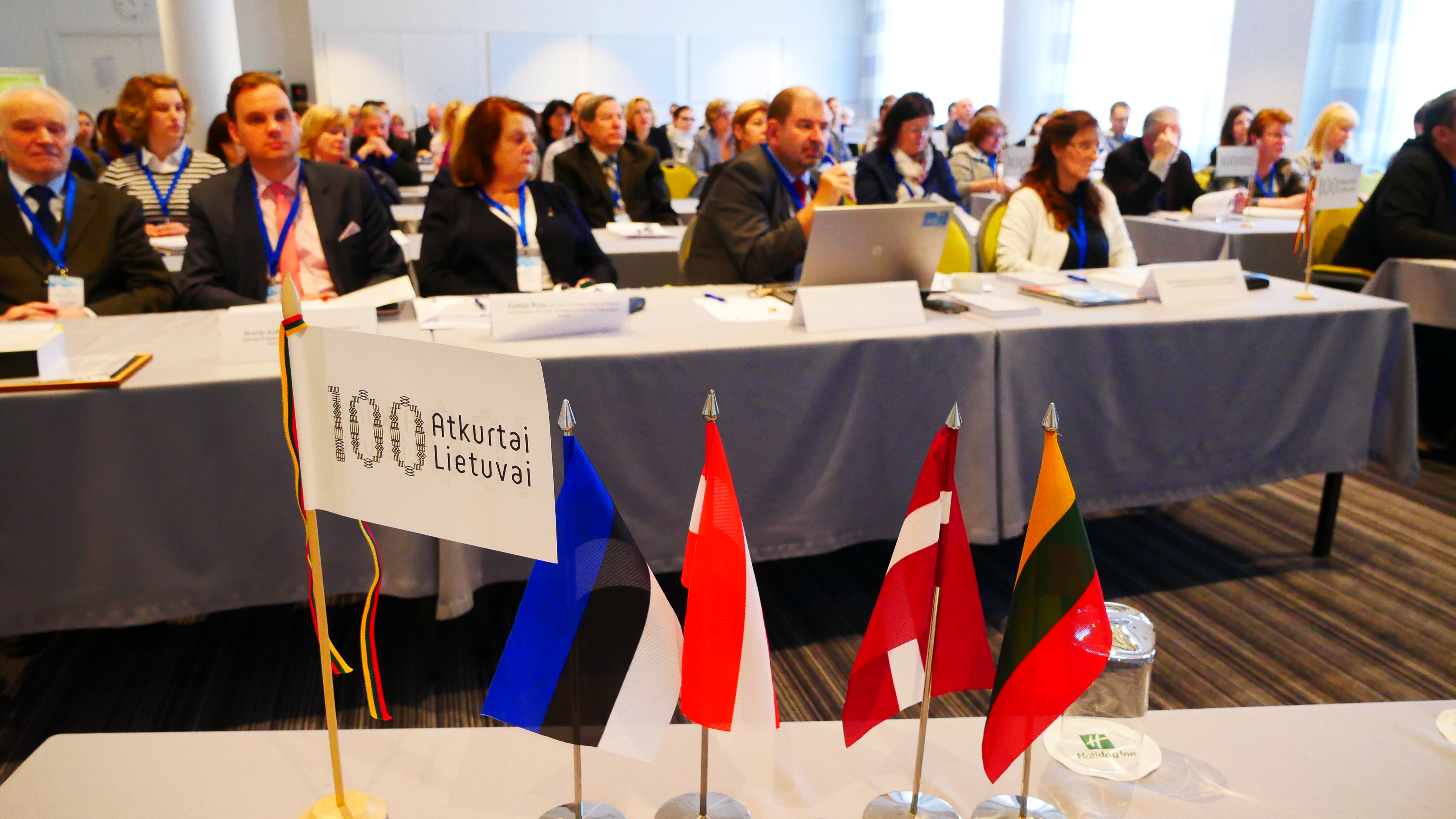
LEA 2018The 2nd International Conference on ERGONOMICS – CREATIVITY AND INNOVATIVITY, GOOD PRACTICE was held in Vilnius, Lithuania, 20 of April, 2018.
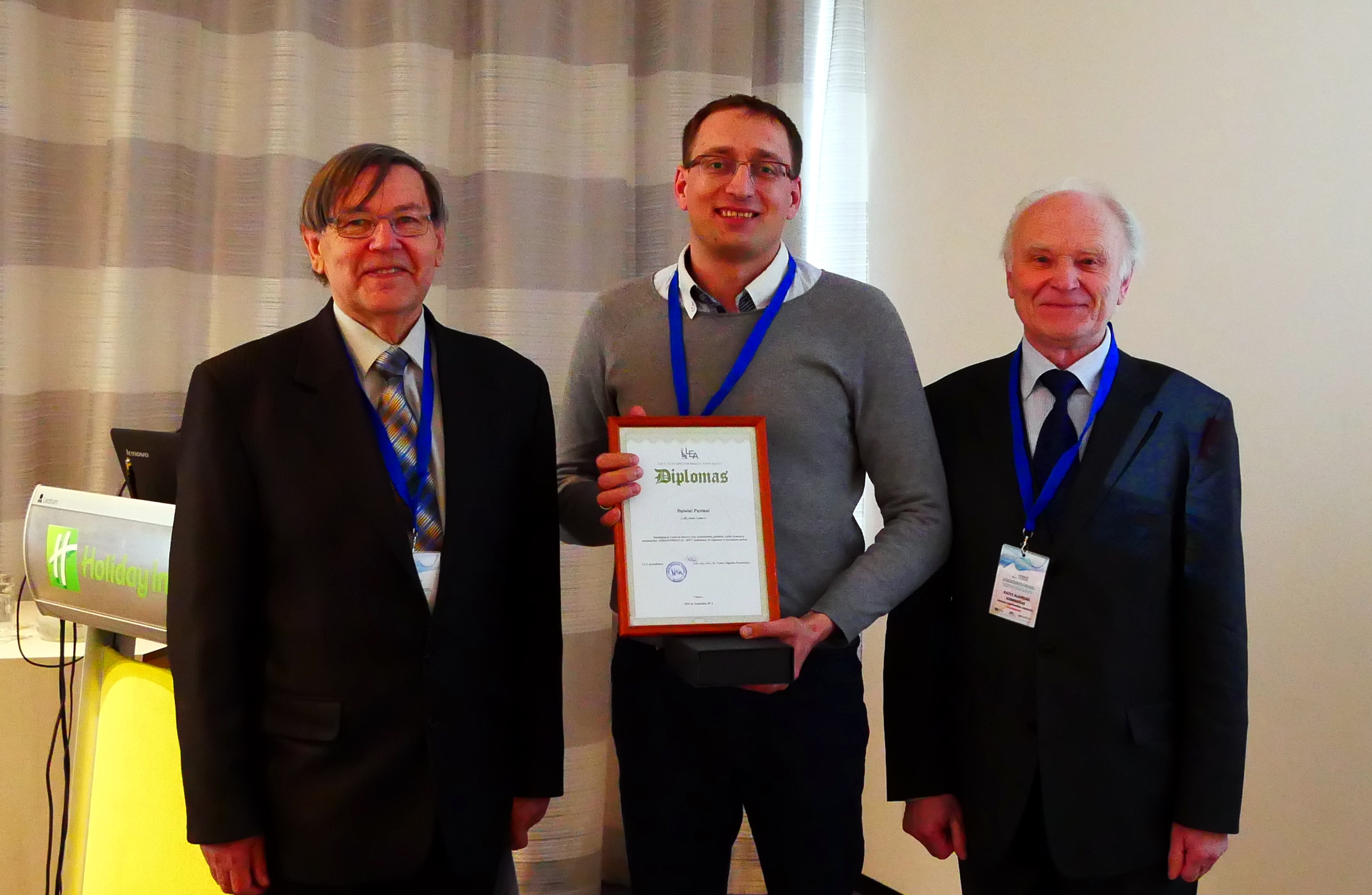

LEA 2018The 2nd International Conference on ERGONOMICS – CREATIVITY AND INNOVATIVITY, GOOD PRACTICE was held in Vilnius, Lithuania, 20 of April, 2018. Conference was organized by Lithuanian Ergonomics Association (LEA) with UAB „Verslo Aljansas“ and dedicated to the 100th anniversary of the restoration of Lithuania and the mention of the founding of the Lithuanian Ergonomic Association for the fifth anniversary.

The objective of this conference was to present the problems how they can be solved by creativity and innovativity integrated with ergonomics in company. Several reports were intended to show, how to improve the workplace from an ergonomics point of view in Austria (Dipl.-Ing. Michael Wichtl), in Estonia (Prof. Eda Merisalu), in Latvia (Eur.Erg., Prof. Zenija Roja and Eur.Erg., Dr. Henrijs Kalkis). Three reports were devoted to the sharing of good practices in tackling ergonomic issues in workplaces. These reports were prepared by representatives of such companies (Dainius Puzinas – UAB “Mars Lietuva; Loreta Indriliūnienė – UAB Yzaki Wiring Technologies; Inga Buzienė – AQ Wiring Systems UAB), which are intensively implementing ergonomic innovations. Legal and theoretical ergonomics problems were analyzed in four reports (Jonas Gricius – Chief State Labor Inspector of the Republic of Lithuania; Genadijus Laškovas – General Manager of UAB “Verslo aljansas”; Dr, Aušra Stankiuvienė – VGTU; Eur.Erg., Assoc. Prof., Dr. Kazys Algirdas Kaminskas – President of LEA).

LEA 2018

From left: to right: Assoc. Prof., Dr. Algis Vegys – chairman of the “Ergonomist – 2017” Competition Commission, winner Dainius Puzinas – safety engineer of UAB „Mars Lietuva“,  and Eur.Erg., Assoc. Prof., Dr. Kazys Algirdas Kaminskas – President of LEA.

Council Meeting 2018

FFES Logo The 2018 council meeting of the Federation of the European Ergonomics Societies (FEES) will be held in Florence 26th August 2018 in conjonction with the IEA Triennal Conference on the issue „Creativity in practice“.
FFES Logo The 2018 council meeting of the Federation of the European Ergonomics Societies (FEES) will be held in Florence 26th August 2018 in conjonction with the IEA Triennal Conference on the issue „Creativity in practice“.

DRAFT TIMETABLE of the meeting

Welcome at 8 : 30, start at 9 : 30, end at 4 : 00 pm

See attachment FEES-council-draft-agenda-V4-26th August2018.pdf

Practical information

  • During the meeting,
    the FEES council will elect a new President and a new Secretary General, the mandate of the present officers coming to its end. Applicants are welcome and according to the FEES rules (point 10 b), “proposals can be submitted until 8 weeks before the general meeting (Council)”, that means before the end of June 2018 and sent to the Secretary General .
  • The Council meeting will take place in the IEA2018 Congress location.

Registration form

„Working worlds of the future“: 200 lectures for 350 scientists and business representatives

GFA 2018 SpringFrom February 21st to 23rd, 2018, about 350 scientists and business representatives met at the 64th Spring Conference of the GfA Gesellschaft für Arbeitswissenschaft (Labor Science Corporation).
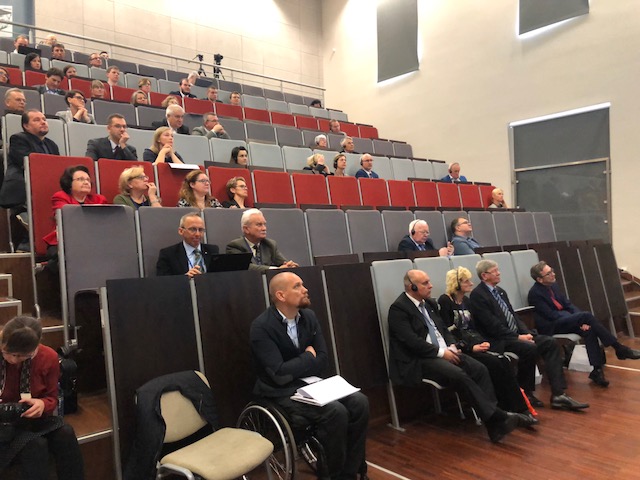
GFA 2018 SpringFrom February 21st to 23rd, 2018, about 350 scientists and business representatives met at the 64th Spring Conference of the GfA Gesellschaft für Arbeitswissenschaft (Labor Science Corporation).

The Conference called „ARBEIT(S).WISSEN.SCHAF(F)T – Grundlage für Management & Kompetenzentwicklung“ (Labor science – fundament for management & competency development) took place at FOM study center in Frankfurt.

More than 200 lectures and workshops on the subject “Working worlds of the future” took place. Host Prof. Dr. Klaus Bengler, President of GfA, Prof. Dr. Thomas Heupel, Vice-President Research of FOM University, and Prof. Dr. Andreas Löhr, study director at FOM Frankfurt inaugurated the conference. Scientists agree on the importance of appreciation.

Ralf Münchow, deputy head of the project group “Science year 2018 – Working worlds of the future” and representative of the German Federal Ministry of Education and Research (BMBF) said that it is important, which appreciation an individual receives for his/her work. Finnish Prof. Dr. (em.) Juhani Ilmarinen described work ability as our most important asset. Recognition, positive feedback, trust, fair treatment, and support are important. According to Kristina Stegner, Prognos AG, the fact that services and products are available around the clock is both, blessing and curse, in the working world of the future. It requires, but at the same time allows, flexible working and individual requirements.

Read
more on the science blog of the FOM University of Applied Sciences (in
German).

ERGONOMICS FOR PEOPLE WITH DISABILITIES SOCIAL AND OCCUPATIONAL ACTIVATION
EDO 2017The conference on ERGONOMICS FOR PEOPLE WITH DISABILITIES SOCIAL AND OCCUPATIONAL ACTIVATION
was held Lodz, Poland, November 21 – 22, 2017.

EDO 2017The conference on ERGONOMICS FOR PEOPLE WITH DISABILITIES SOCIAL AND OCCUPATIONAL ACTIVATION
was held Lodz, Poland, November 21 – 22, 2017.

This conference aimed to present the factors affecting life activation of people with disabilities. The objective was to present the problems that people with disabilities faced by the participation in social and professional life and the exercise of basic daily activities. Another objective was to present the research achievements and the needs of the practical actions for these people. There were also two exhibitions: one focused on two-wheeler wheelchair and and the other about cars for people with disabilities.

During this two days, 45 papers were presented and will be published in the Conference Proceedings in Open Access by De Gruyter. The authors of the best papers will be published in the Special Section of Disability and Rehabilitation journal.

EDO 2017FEES endorsed this event and Sylvain Leduc, president of the Federation of European Ergonomics Societies made a presentation related this issue in the French context by spreading data and also knowledges regarding French Ergonomics approach developed. 
Download the presentation here.

The 14th International Symposium on Management — SIM 2017

SIM 2017The 14th International Symposium on Management (SIM 2017) took place in Timisoara (Romania) between 27-28 October 2017 and ran under the topic of “Challenges and Innovation in Management and Entrepreneurship.” The SIM conference takes place every two years and is organized jointly by Timisoara’s two major universities, the Politehnica University of Timisoara and the West Uni
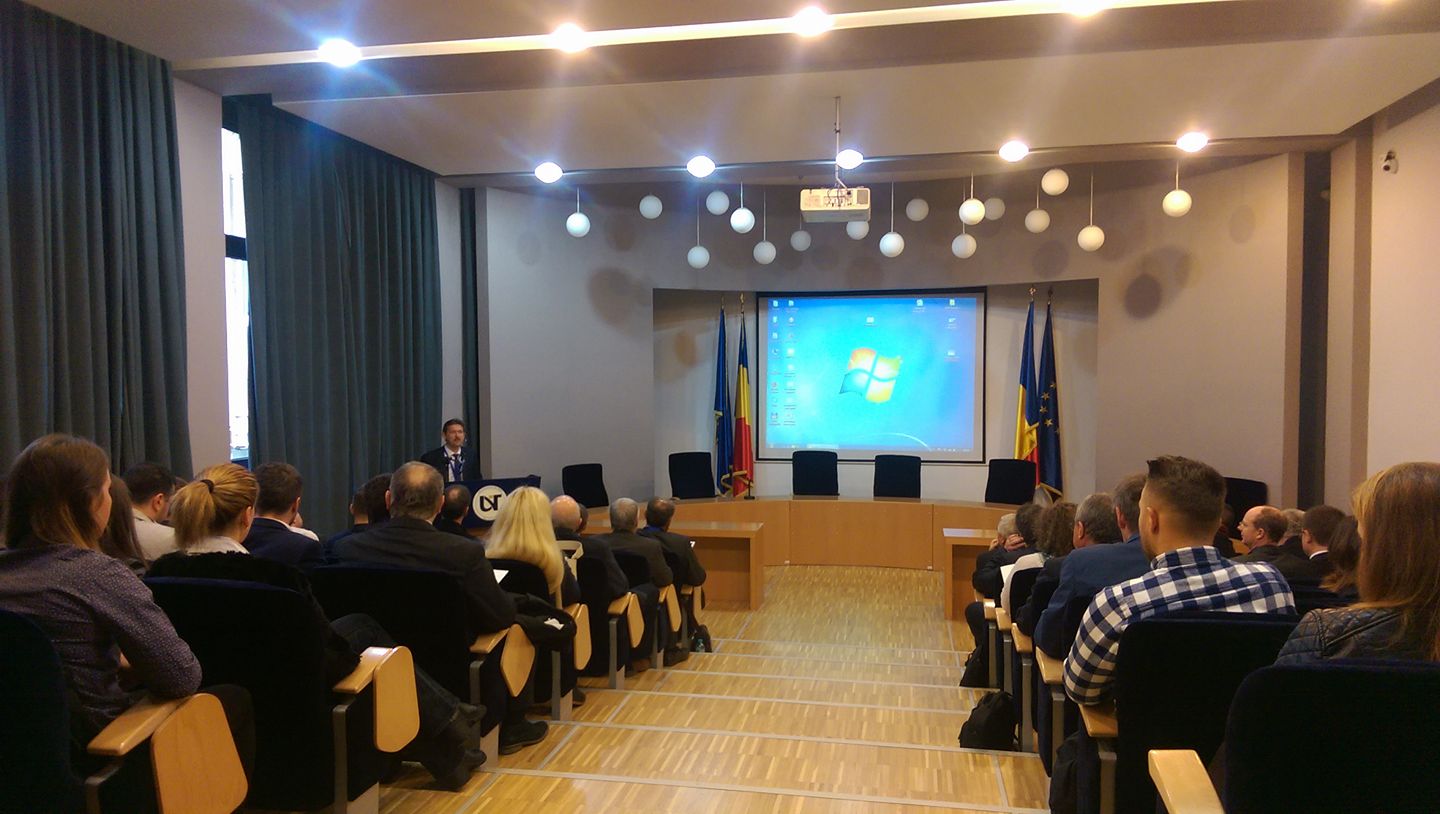
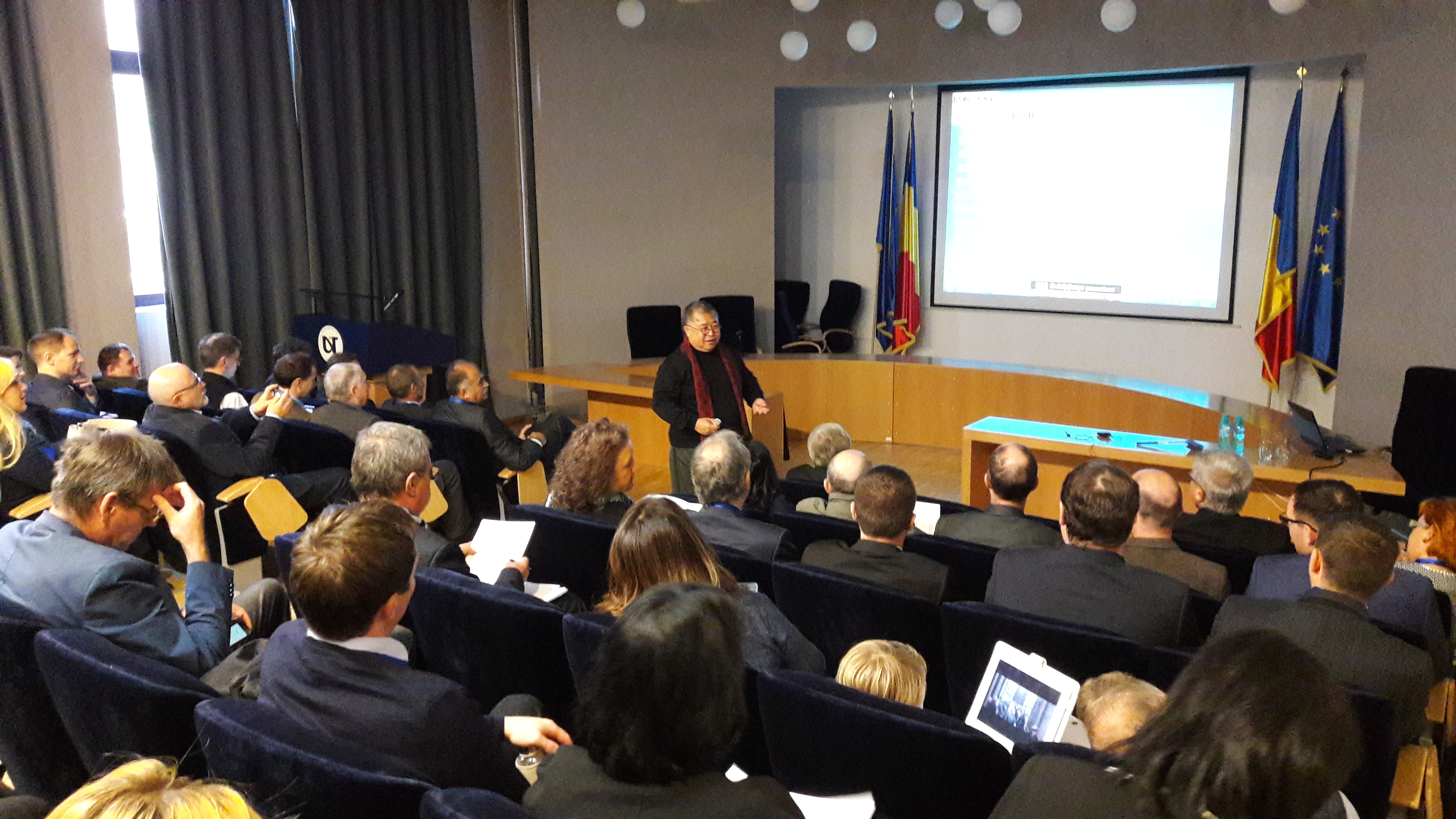
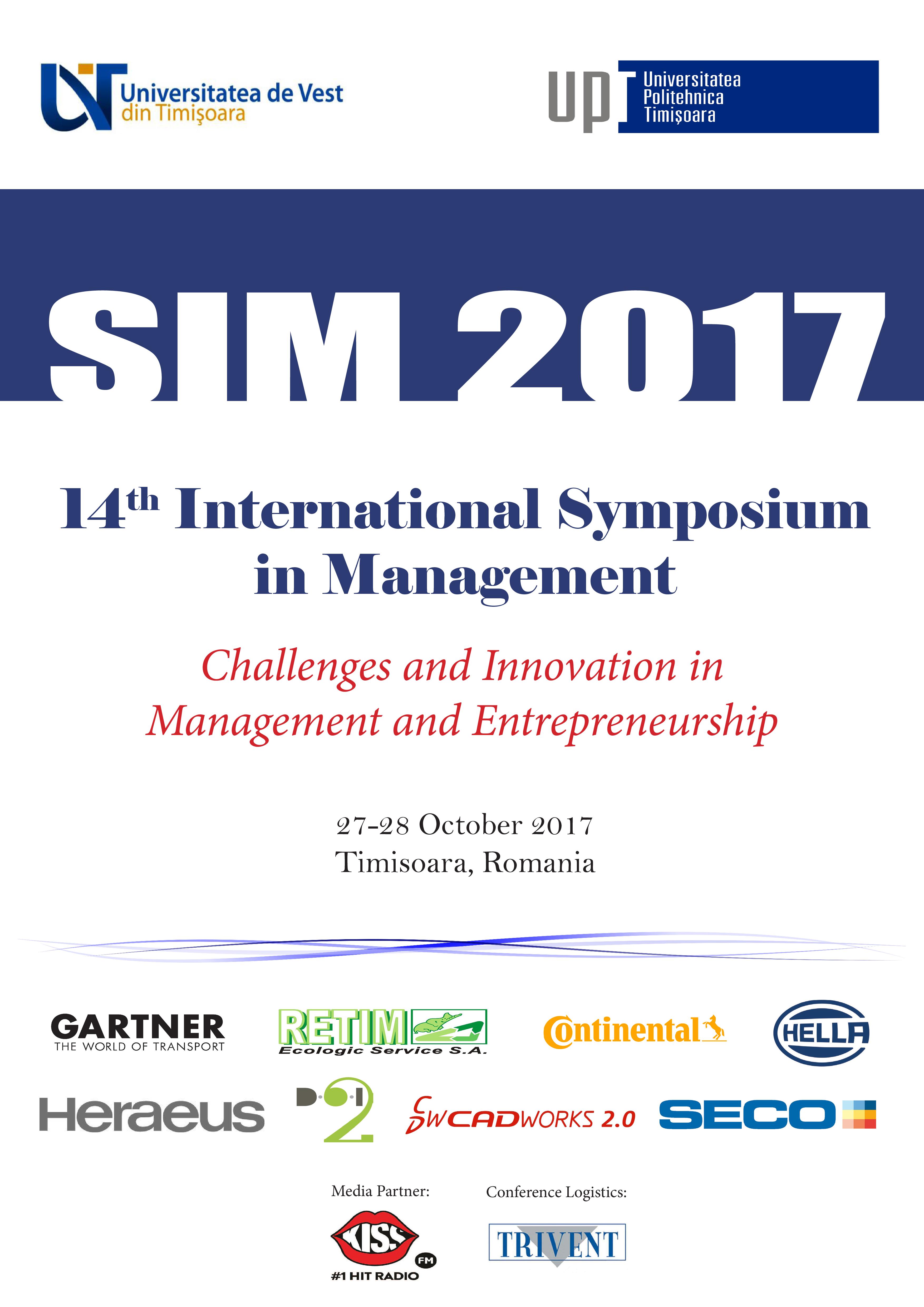
SIM 2017The 14th International Symposium on Management (SIM 2017) took place in Timisoara (Romania) between 27-28 October 2017 and ran under the topic of “Challenges and Innovation in Management and Entrepreneurship.” The SIM conference takes place every two years and is organized jointly by Timisoara’s two major universities, the Politehnica University of Timisoara and the West University of Timisoara. With over 80 participants, SIM 2017 welcomed a significant number of international participants from countries as varied as Hungary, Ecuador, France, Israel, the United States of America, Slovenia, Finland, Germany, Poland, Russia.

The four keynote speakers delighted the audience with lively presentations on challenges in educating the millennials (by Ronny Adhikarya, World Bank and ex-United Nations Representative, USA); on the leader as synergy-broker (by Gyula Bakácsi, Corvinus University, Hungary); on strategic thinking in turbulent times (by Constantin Brătianu, Bucharest University of Economic Studies, Romania); and on the use of management within a multinational company (by Samuel Cires from Heraeus Romania). Summaries of the presentations can be read here: http://sim2017.org/program.html

SIM 2017All papers submitted to SIM go through a rigorous peer reviewing process and as a result the previous two editions of the conference, published open access by Elsevier, were indexed in Thomson Reuters. The 2017 edition will also be published by Elsevier and sent for evaluation in Thomson Reuters.
The organizers would like to thank all participants for their valuable contributions and interest in the SIM topics and they hope to meet all of them again for the 15th edition of the conference, an anniversary edition, which will take place in 2019 in the same city of Timisoara.

SIM 2017

Lisbon’s 1st International Forum on Occupational Health

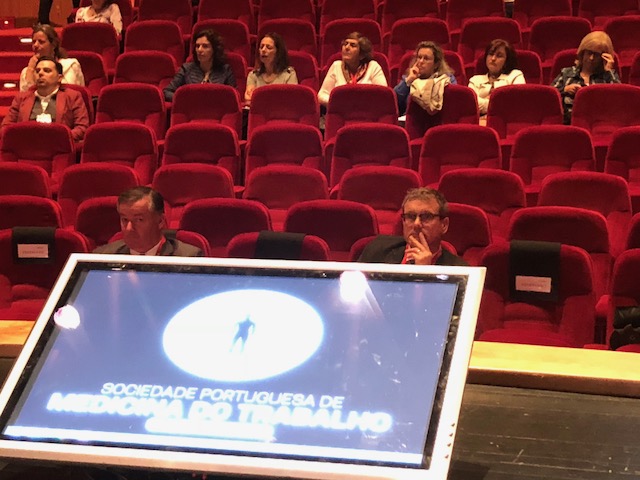
Lisbon 2017On 4th November, Lisbon had hosted the first International Forum on Occupational Health.

The events’ objectives was:

Lisbon 2017On 4th November, Lisbon had hosted the first International Forum on Occupational Health.

The events’ objectives was:

  • To strengthen the dissemination of the latest and most relevant evidence-based scientific knowledge on Occupational Health, Work Safety and Environmental and Public Health.
  • To promote a meeting of ideas, people and organizations, in order to attain consensus for the joint dissemination of Best Practices and actions, aiming at the promotion of the Occupational Health and Safety of the workers, as well as the promotion of Environmental and Public Health.
  • To bring closer and promote the dialogue among the professionals and representatives of organizations in the field of Occupational Health, Work Safety and Environmental and Public Health.
  • To enable the discussion on emerging or divergent themes, in order to identify the trends and development of Occupational Health, Work Safety and Environmental and Public Health, at a national, international and intercontinental level.

With this objective, we intend to enable a welcoming environment for non-consensual (or even divergent) approaches that can strengthen the knowledge on the current reality and constant evolution of society and organizations, thus identifying trends and strains in the short, medium and long run.

FEES was invited to make a presentation focused on the standpoint of ergonomics on the issues of Occupational Health. The slideshow could be download here.