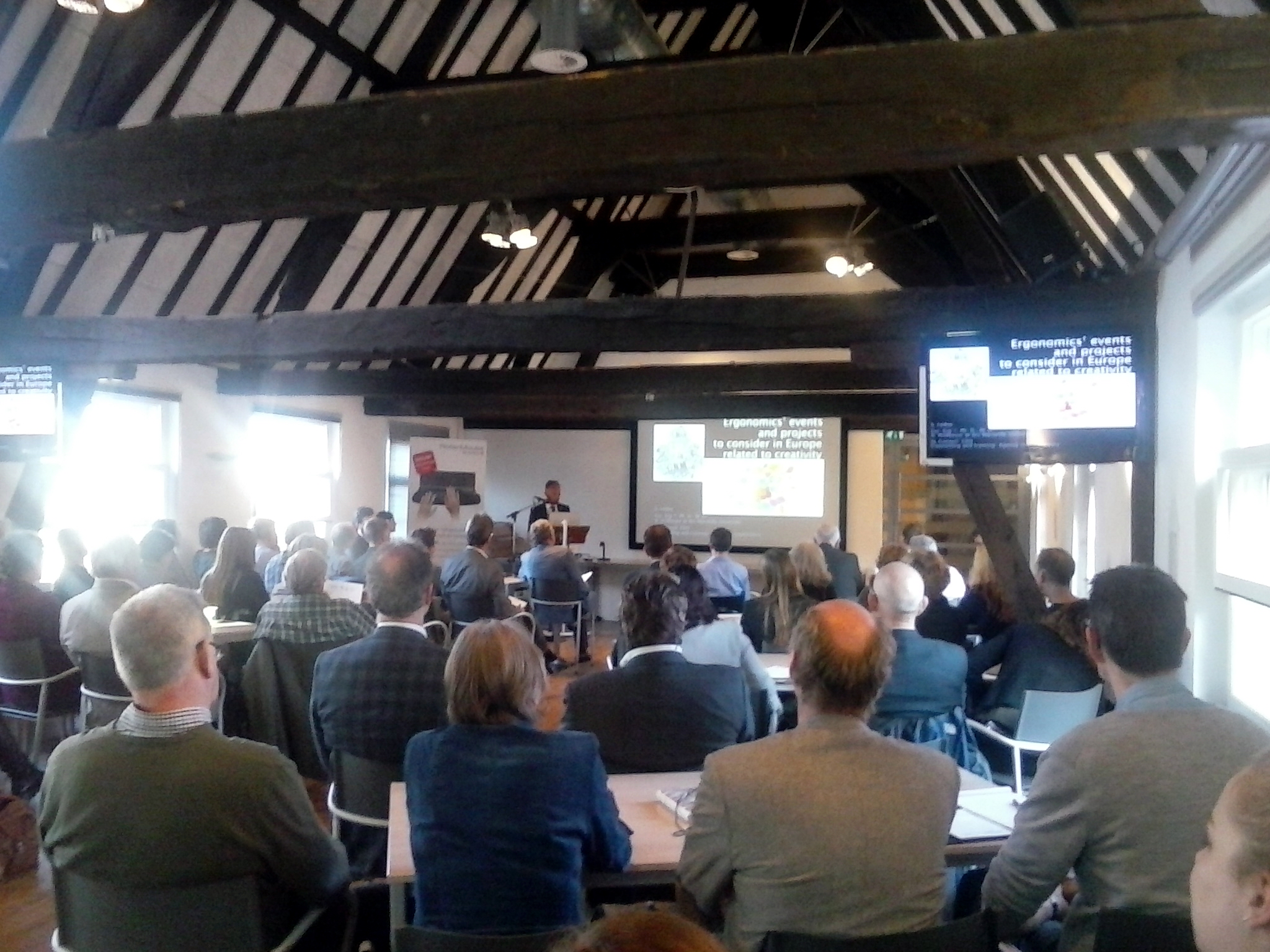
FEES COUNCIL meeting 2017

FFES Logo The 2017 council meeting of the Federation of the European Ergonomics Societies (FEES) was held in Brussels 26th June 2017  in conjonction with the FEES ETUI BES Conference on the issue „workers and creativity“

FFES Logo The 2017 council meeting of the Federation of the European Ergonomics Societies (FEES) was held in Brussels 26th June 2017  in conjonction with the FEES ETUI BES Conference on the issue „workers and creativity“

.

TIMETABLE of the meeting

Welcome at 8 : 30 pm ; starting at 9 :00 End at 1 : 00 pm

  • Opening, welcome and housekeeping
  • Roll call of the delegates and apologies for absence ; welcome of new members ; call for miscellaneous items
  • Approval of the draft agenda (cf present document )
  • Approval of the Council Meeting minutes in, September, 26th 2015 (cf doc.attached)
  • Annual FEES Report (document to be sent) and Report on the Standing Committees
  • Report from the member societies on their main activities
  • FEES Financial Report (cf doc.to be sent)
  • Election of the treasurer (candidates are required)
  • Change of rules proposals (document to be sent)
  • Information from the invited ergonomics societies and organizations
  • Projects for FEES
  • IEA issues : Information about Memorandum of Understanding between FEES and IEA (doc. to be sent)
  • IEA issues : 2018 IEA Congress in Firenze
  • Next Council meeting : date and place – proposals to be made
  • Miscelleanous
  • Closing

Sum up of the FEES council meeting

By Pascal ETIENNE, FEES Secretary General

The FEES council took place in Brussels with representatives of 11 members societies coming from Belgium (BES), Portugal (APERGO), Austria, the Netherlands (NL HFE), Hungary, Italy (SIE), Latvia (LES), Switzerland (Swissergo and GfA), Finland and France (SELF). Observers from CREE, the Institute of Ergonomics & Human Factors (IEHF) in the United Kingdom and delegates from the IEA were also present (Yushi Fujita, Chair and José Orlando Gomes, Vice President).

During the meeting, the annual and financial reports were adopted. A new treasurer, Pedro FERREIRA (active member of APERGO, Portugal) has been elected, replacing Reinier Hoftijzer (from HF NL) whose mandate came to its end. Several modifications of the FEES rules have been decided, the main change allowing FEES to welcome “associated members”. Consequently the FEES Council decided to welcome IEHF as associated member.

During the past year, FEES delegates attended several conferences and workshops organized by the member societies: the GfA in Brugg (Switzerland), the IEHF in Daventry (UK), the APERGO in Lisbon and the Polish ergonomics society in Poland. This gave the opportunity to present lectures and / or to strengthen the links between the FEES board and the member societies. FEES delegates attended as well several meetings at the EU level, organized by OSHA, the CEN or SAFERA, giving the possibility to promote ergonomics.

FEES has been strongly involved in the preparation of the conference on “workers and creativity” held jointly with the FEES council meeting, showing a cooperative process between ETUI, BES, CREE and FEES with the support of IEA. This support is a first evidence of the mutual support decided by IEA and FEES, following the signature of a Memorandum of Understanding between both associations in Florence at the end of March 2017.

In the future, FEES will continue to co-operate with IEA in order to enhance ergonomics in Europe, especially in the Eastern European countries, and with the other regional branches of IEA. FEES will also to prepare the IEA triennal Congress, organized by the Italian Ergonomics society (SIE) in Florence. The next FEES council to be held at the same time will elect a new Chair and a new Secretary General, the mandate of the present officers (Sylvain Leduc, President and Pascal Etienne, Secretary General) coming to its end.

Practical information

  • An informal FEES networking meeting took place on Sunday evening, the 25th of June from 18.00 until 21.00 hours in a location close to the ETUC building (near Brussels North station).
  • The FEES Council meeting was organized in conjonction with the FEES ETUI BES Conference on the ssue „workers and creativity“ which took place on the 26th and 27th June 2017.
  • The Council meeting took place E. Blerot Street 1, 1070 Bruxelles, Room  Van Mieghem, first floor.
  • The council dinner was on Monday, the 26th.
Official campaign partner meeting 2017

As part of the 2016-2017 Healthy Workplaces for All Ages campaign of the European Agency for Safety and Health at Work (EU-OSHA) an Official campaign partner meeting was held, where results of the campaign partner category of Healthy Workplaces Good Practice Awards was presented

As part of the 2016-2017 Healthy Workplaces for All Ages campaign of the European Agency for Safety and Health at Work (EU-OSHA) an Official campaign partner meeting was held, where results of the campaign partner category of Healthy Workplaces Good Practice Awards was presented. FEES at OSHA

To achive a sustainable working life and to prevent musculoskeletal disorders (MSDs) arising from sedentary desk-based work. campaign partner SAP started a program and received the award for the initiative ‘Run Your Health’ that empowers employees of all ages to take action for their health. Thanks to the program the participants reported:

  • a 100 % increase in regular exercise
  • a 30 % increase in the number of steps recorded per month
  • a 56 % reduction in sedentary time.

Link for details: GPA_2016-17_OCP_Winner_SAP.pdf

Campaign partner Toyota Material Handling was commended for a physiotherapy programme to prevent strain injuries at work and to deliver measurable change across partner companies. They took action to prevent strain injuries at work:
following an in-depth analysis of accident data, as well as consultations with service technicians, poor manual handling practices were identified as the primary cause of injuries; therefore, the company developed a physiotherapy programme. Some results achieved

  • In the last 2 years, accidents through overstrain have more than halved.
  • The proportion of employees who took leave of absence as a result of an accident decreased from 20 % in 2006 to 5 % in 2014.
  • Since undergoing treatment with the physiotherapist, none of the employees who experienced overstrain injuries has experienced a similar injury.

Link for details GPA_2016-17_OCP_Commended_Toyota_Material_Handling.pdf (378.14 KB)

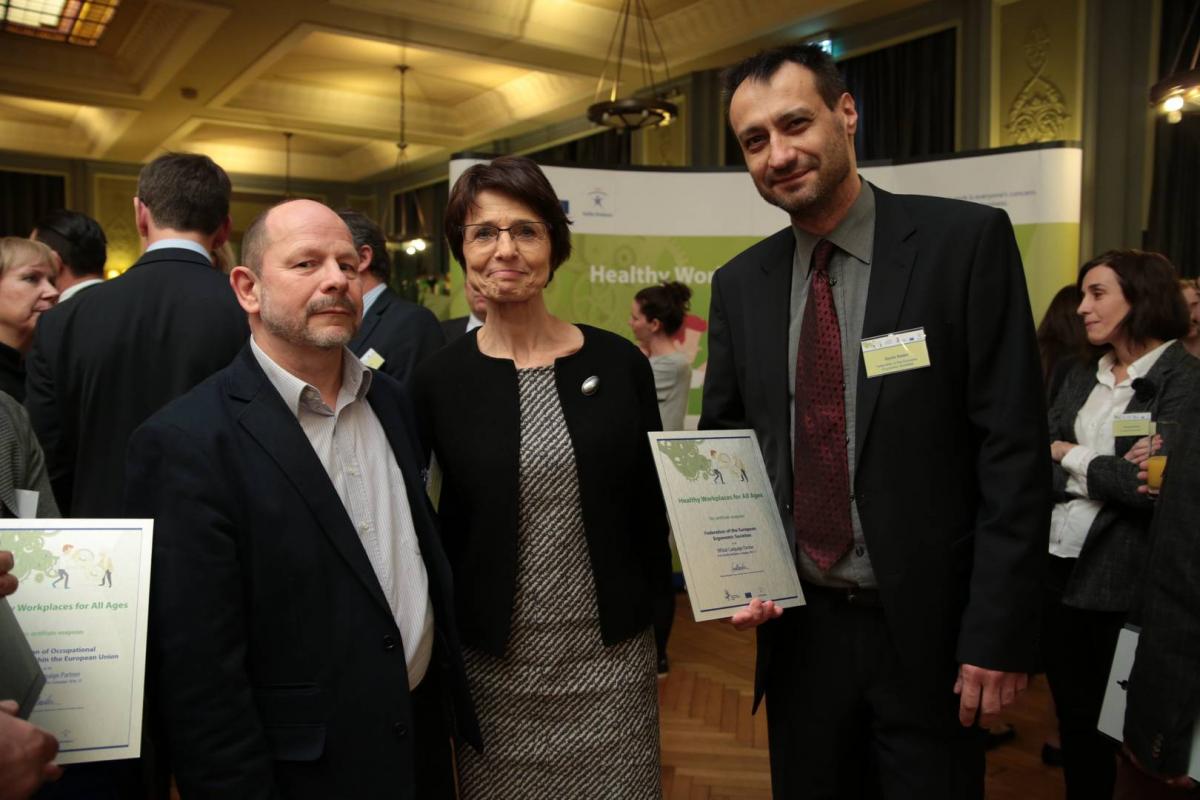
On the photo Marianne Thyssen, European Commissioner for Employment, Social Affairs, Skills and Labour Mobility, Karoly Gyorgy, chair of the EU-OSHA Governing Borad (left) and Gyula Szabo (right) with the certificate that recognises the Federation of the European Ergonomics Societies as an Official Camapign Partner.
FEES at OSHA

FEES – ETUI – BES – CREE conference

IEA Conference organised by the Federation of European Ergonomics Societies (FEES), ETUI (European Trade Union Institute), the Belgian Ergonomics Society (BES) an the CRRE (Centre for Registration of European Ergonomics ®) in the auditorium of International Trade Union House (ITUH), Boulevard du Roi Albert II 5,

IEA Conference organised by the Federation of European Ergonomics Societies (FEES), ETUI (European Trade Union Institute), the Belgian Ergonomics Society (BES) an the CRRE (Centre for Registration of European Ergonomics ®) in the auditorium of International Trade Union House (ITUH), Boulevard du Roi Albert II 5, 1210 Brussels, Belgium on 26th and 27th June 2017.

ETUI jobs The conference focuses on the issues of creativity related to the improvement of the working conditions by workers and worker representatives participation.

For many years now in Europe, participatory ergonomics has highlighted the importance of taking account of workers’ expertise with respect to their situations and working conditions and of how workers’ experiences are perceived within companies.

Participatory ergonomics covers different realities depending on what it sets out to achieve: better primary prevention, fewer muscular-skeletal disorders (MSDs), transformed work situations, adjusted or more appropriately designed work equipment or machinery, etc. It also covers many different methodologies and can assume many different forms.

Today, ergonomics faces questions associated with the notion of creativity. Ergonomists encounter creativity in all domains of their activity: workspaces, organisation, design, cognition, systems’ resilience, etc. The questions are as follows: Do collaborative workspaces (co-working spaces that are ‘third places’) promote creativity? How can the company promote creativity? Which suitable processes and tools can serve this purpose? How can new products be made that are tailored to their uses and users? How do new ideas emerge? What happens when the rules of work or working procedures no longer apply? How can creativity be unleashed in unplanned situations?

BES Logo

Thus, the issue of creativity once again raises the old question asked by the ergonomics of activity regarding workers’ initiative. Today, creativity can serve to help explain what ergonomists have been showing for a very long time already, namely how workers regulate and develop operational procedures that enable them to work and cope with unforeseeable factors. To what extent do initiatives taken by operators in the field to ensure the performance and resilience of systems constitute real innovations?

Accordingly, the main topics we intend to address at the conference are:

  • How creative are workers in designing/rectifying work situations? The challenge is to show the creative contributions made by workers in general (knacks, extended applications (e.g. use of tools for other than their primary functions), adaptation of existing tools, creative uses, resilience, etc.) and to take an interest in what they can be expected to contribute in terms of creativity, amongst other things.
  • Does the participation and creativity of workers as experts in their activity allow the co-construction of suitable, shared solutions for improving and transforming working conditions?
  • Can participatory ergonomics provide answers to changes in the quality of work and employment status, to issues associated with increasing the age of retirement, the ageing workforce and the challenges of technological advances and labour-related changes (industry 4.0, digitalisation, robotisation, cobotics, etc.)?
  • CREE Logo

  • What are the prerequisites for workers’ participation in ergonomic intervention? Do workers and their representatives need to be trained in ergonomics to aim for more efficient ergonomic intervention?
  • Does professionalising workers or their representatives through training lead to better interaction with the other agents of prevention (occupational physicians, labour inspectors, prevention consultants, etc.) conducive to the development of innovative and creative ergonomic solutions?

FFES Logo

Program

MONDAY 26 JUNE 2017

13:00 Welcome coffee

13:30 Introduction and welcome speeches

  • BES: Dirk DELARUELLE, President
  • ETUC: Esther LYNCH, Confederal Secretary
  • European Commission: Felicia STOICA, Directorate-General for Growth
  • International Ergonomics Association: Yushi FUJITA, President

14:00 Chair: Sylvain LEDUC, FEES/Moderator: Alain PIETTE, BES

  • Working conditions European survey: Agnès PARENT-THIRION, Eurofound
  • Working conditions in Belgium: Patricia VENDRAMIN, Université Catholique
    de Louvain

15:00 Coffee break

15:30 Chair: Dave O’NEILL, CREE/Moderator: Gyula SZABO, FEES

  • Ageing at work in Portugal: Teresa COTRIM, Lisbon University, Portugal
  • Working conditions in Latvia: Henrijs KALKIS, Riga University, Latvia
  • Working conditions in Finland: Risto TOIVONEN, FES, Finland

17:00 Debate and general discussion

18:00 Conclusion: José Orlando GOMES, IEA

TUESDAY 27 JUNE 2017

09:00 Chair: Marianne DE TROYER, ETUI/Moderator: Pascal ETIENNE, FEES

  • Workers’ participation by feedback method: Fabio STRAMBI, ETUI advisor on ergonomics and standardisation & Massimo BARTALINI, USL Toscana, Italy
  • Relation between ergonomists and workers’ representatives: Eloïse GALIOOT & Ludovic PONGE, SELF, France
  • Workers’ participation in practice: David WALTERS, Cardiff University, UK
  • Coffee break
  • 10:45 Trade union cooperation against work-related cancers: the case of chemicals: Tony MUSU, ETUI
  • Creativity and innovation in business: Yushi FUJITA, IEA

11:45 Debate and general discussion

12:30 Lunch

13:30 Chair: Sylvain LEDUC , FEES /Moderator: Aude CUNY, INRS

  • Reflection on creativity in practice: Giulio TOCCAFONDI, Clinical Risk Management Toscana Region, Italy
  • Worker involvement in occupational health and safety: evidence from ESENER: Xabier IRASTORZA, EU-OSHA
  • Talking about work: Bénédicte MOUTIN, CFDT, France
  • The cobots, issues related to participation with robots: Théo MOULIERES-SEBAN, Safran, France
  • Creativity study in manufacturing of white goods and their outside innovators: Annegret PETZOLDT, GfA, Germany
  • Stronger together: human factors, safety and productivity: Steve BARRACLOUGH, CIEHF, UK

16:45 Debate and general discussion
Conclusion: Sylvain LEDUC, FEES

17:00 End of conference

Registration of the participants is free of charge. Due to the limited numbers of seats, FEES member societies are invited to send the names of their representatives to the conference, as soon as possible. 

Workshop – Ergonomics and creativity 2016

A workshop on Ergonomics and creativity  took place during a congress on ergonomics organized by the Dutch organization “A workshop on Ergonomics and creativity  took place during a congress on ergonomics organized by the Dutch organization “Human Factors vereniging” in Amersfoort, NL in November 2016. This event was co-hosted by the Federation of European Ergonomics Societies and the Centre for Registration of European Ergonomists.

Photo of a FEES event
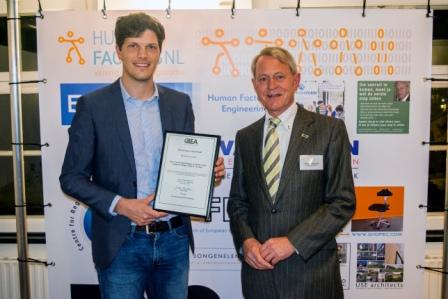
Ernst Koningsveld IEA Historian handling over the IEA/Liberty Mutual award to Pieter
Coenen
of University Amsterdam.

Ergonomists meet in Amersfoort

Members of the Federation of European Ergonomist Societies (FEES), the Centre of Registration of European Ergonomist (CREE) and Humanfactors.nl meet and share ideas in Amersfoort, The Netherlands.

First, delegates of Federated European Ergonomist Societies with representatives of CREE and the Israeli Ergonomics Association attended the annual council meeting of FEES 23, November. Special attention has been given to the possibilities of promotion ergonomics to young people.

Members of the Federation of European Ergonomist Societies (FEES), the Centre of Registration of European Ergonomist (CREE) and Humanfactors.nl meet and share ideas in Amersfoort, The Netherlands.

First, delegates of Federated European Ergonomist Societies with representatives of CREE and the Israeli Ergonomics Association attended the annual council meeting of FEES 23, November. Special attention has been given to the possibilities of promotion ergonomics to young people.

Video recorded address of Yushi Fujita, president of the International Ergonomics Association (IEA) opened the Thursday morning session of the IEA roundtable on “Ergonomics in design for all”. The afternoon session was organised as part of the preparation process of IEA triennial congress 2018.

Download Ergonomics and creativity : an opportunity for the activity ergonomics? of Pascal Etienne, secretary general of FEES.

Friday the congress of Humanfactors.NL continues is Dutch, and starts the two day meeting of CREE representatives.
Thanks to Reinier Hoftijzer, treasurer of FEES for his effort and making these days a success.

Photo of a FEES event
Sylvain LEDUC, president of FEES presenting at the workshop on Ergonomics and creativity.

Sum up of the ETUI workshop on machinery feedback method

The workshop held at Colle Val d’Elsa (Italy), October 11th and 12th, 2016, organized by ETUI, the European Trade Union Institute, was divided in two parts: on the first day, a workshop limited to the Trade Unions network in the field of machinery standardization and some invited persons (EU market surveillance authorities in the machinery field, several experts, including a FEES representative, Pascal ETIENNE). About 30 persons attended this part of the meeting.

The workshop held at Colle Val d’Elsa (Italy), October 11th and 12th, 2016, organized by ETUI, the European Trade Union Institute, was divided in two parts: on the first day, a workshop limited to the Trade Unions network in the field of machinery standardization and some invited persons (EU market surveillance authorities in the machinery field, several experts, including a FEES representative, Pascal ETIENNE). About 30 persons attended this part of the meeting.


During the whole second day, the meeting was open to the Italian authorities and to locally interested experts in the field of OSH (mainly from the Tuscany region) – about 100 persons were present.


On the first day was presented and discussed a sum up of the ‘fedback method’ as specified in the TR 16710-1 : 2005 – Part 1.


Fabio Stambi reminded that the project on the ‘feedback method’ started with a TUTB project in 1997: the aim was to collect user experience to improve the woodworking machine safety. The work on the floor was made by the Italian Preventive Service, USL 7 and Sindnova, an Italian Trade-Unions Institute. The project has been enhanced by the mandate 301 from the EU Commission to the CEN concerning the standards in the field of the revised machinery Directive: in the EU Commission document was mentioned he aim to obtain a real feedback coming from the end users. So ETUI was asked to provide a technical report. The outcome of the process is the CEN document (a ‘technical report’): TR 1610-1, adopted in December 2015.


The plan of the report is as follows:


  • Choice of the machinery
  • Data collection: accidents, market, standards, …
  • Choice of SME where the machine is used :

    • collaboration of the employers and workers
    • field investigation in the SMEs
    • selection of skilled machine users

  • Preparation of the working groups

    • Working groups meetings (workers + ergonomists)
    • Preparation of materials

  • Final report: ergonomics and prevention solution
  • Technical report


The debate during the workshop was on several issues, such as:


  • The status of the document: a Technical report (‘TR’), which does not allow the free access and which is on several issues related to the machinery directive. A guide could be a better solution to allow a free access.
  • There was also a debate on the issue ‘Human factors and ergonomics’, in particular the question was: which name is the more appropriate to provide possibilities of action on the machines design in line with the OSH requirements : between ‘Ergonomics’ and ‘Human factors’, which name / concept allows at the best to trigger actions with a wide scope?

The EU Commission informed that a public consultation on the revision of the machinery directive was in progress on the EU commission site till the 16th December 20106.


A draft declaration was discussed, the content of which being published and presented during the next Machinery Directive working group, in November in Brussels.


New issues appeared in the machinery field, in particular: the design and use of robots related to safety, which is discussed in many places : workshops and forums.


On the second day morning, several general declarations was presented on the issue ‘workers participation in the machine design’, including the one presented by FEES on the of ergonomic principles; a presentation of the feedback method by Fabio Strambi; a presentation from Georg Krämer (former chair of the TC 122) on the ergonomic Essential Safety Requirements and the concerned standards in the CEN and ISO field; a trade-unionist (from the European Federation of the construction workers) presented the results of an inquiry documented with 200 accidents. The report has been followed by a project aiming to improve ergonomics, safety, the work organization and training, based on field studies related with the feedback method.


A presentation of the next IEA 2018 Congress in Florence was made by a representative of the Italian Ergonomics Society, who stressed the preparation as a process with the help from different ergonomic societies through Europe.

In the afternoon, 10 examples of the feedback method implementation in the Tuscany region were presented by several experts coming from the USL Tuscany in the field of OSH. The examples presented dealt with the following machines and / or work situations: 1 Wood working machines (circular saws and moulding machines) ; 2 Angle grinders for cutting marble ; 3 Forklift trucks ; 4 Telehandlers ; 5 Agricultural machines (combine harvester, agricultural tractors, tracted harvesters for grapes harvesting). Two other examples of the implementation of the method were presented, not dealing with machines: on manual handling in building sites and assembly of metal scaffoldings.

A lot of debates and projects may follow this interesting event: on the design of machines, on the methodologies to foster the workers participation, on new issues for the designers and workers, such as robots… Initiatives taken by both bodies (FEES and ETUI) will follow.

IEA Round Table “Ergonomics in design for all” 2016

A round table discussion on Ergonomics and Design for All took place during a congress on ergonomics organized by the Dutch organization “Human Factors vereniging” in Amersfoort, NL in November 2016. This event was co-hosted by the Federation of European Ergonomics Societies and the Centre for Registration of European Ergonomists.

A round table discussion on Ergonomics and Design for All took place during a congress on ergonomics organized by the Dutch organization “Human Factors vereniging” in Amersfoort, NL in November 2016. This event was co-hosted by the Federation of European Ergonomics Societies and the Centre for Registration of European Ergonomists.

The round table discussion consisted of various expert talks on different aspects of the Design for All concept ranging from applications in the built environment to the health care sector. The goal was to introduce the concept, provide an overview of mandates and subsequent standardization approaches as well as delivering particular insights from research institutions. Both, speaker panel and the audience, consisted of individuals from various countries. The international participation and the active discussion during the round table have shown that the work of the IEA TC Ergonomics in Design for All is seen as an important and valuable activity. The IEA international round table was a huge success. There is broad support for the aim of the TC to establish “Design for All” as a generally accepted and applied methodology in the process of designing for products, services and processes.

Alexander Rosemann and Isabella Steffan chaired the discussion and conclusion which were centered around the question: How can Ergonomics give a contribution on Design for All/Universal Design approach? (download full paper here).

The congress on human factors and also the round table discussion on the topic “Design for All” has been considered a huge success With 70 participants, the round table discussion reached a good audience and also allowed for interesting exchange of thoughts and discussions. The participants came from many different countries which shows that the topic of Design for All is relevant to many within the IEA.

The round table provided design-related topics within a broad range of application domains ranging from the built environment via product design to the health sector. It does not only address products but also services and procedures. This issue has been recognized by international standardization organizations and found its way into recommendations such as the CEN-CENELEC Guide 6.

Having a standard in place has been an important and huge step towards to goal of implementing the principles of Design for All. But this step marked the beginning of a journey and not its end. There are many challenges lying ahead of us such as:

  • Ensure the broad application of standards such as the CEN-CENELEC Guide 6 and related European mandates.
  • Continue to provide guidance and direction to relevant stakeholders
  • Identify further application domains for Design for All
  • Collaboration in Public Private Partnerships to develop solutions following the Design for All approach
  • Support knowledge generation and transfer.

Design for All is a concept in the field of ergonomics that support human centered design. As new technologies make it to the market faster than ever, it is even more important to implement them such that all can benefit from it. The range of topics and the active participation of the audience during the round table discussion on Design for All has shown that this topic has the attention it deserves. This left no doubt that the ultimate goal of the IEA TC EinDfA must be to establish “Design for All” as a generally accepted and applied methodology in the process of designing for products, services and processes.

International Seminar of Ergonomics – Gniezno

LEB The 29th International Seminar of Ergonomics was held in Gniezno (Poland) from 20th to 22th June 2016.
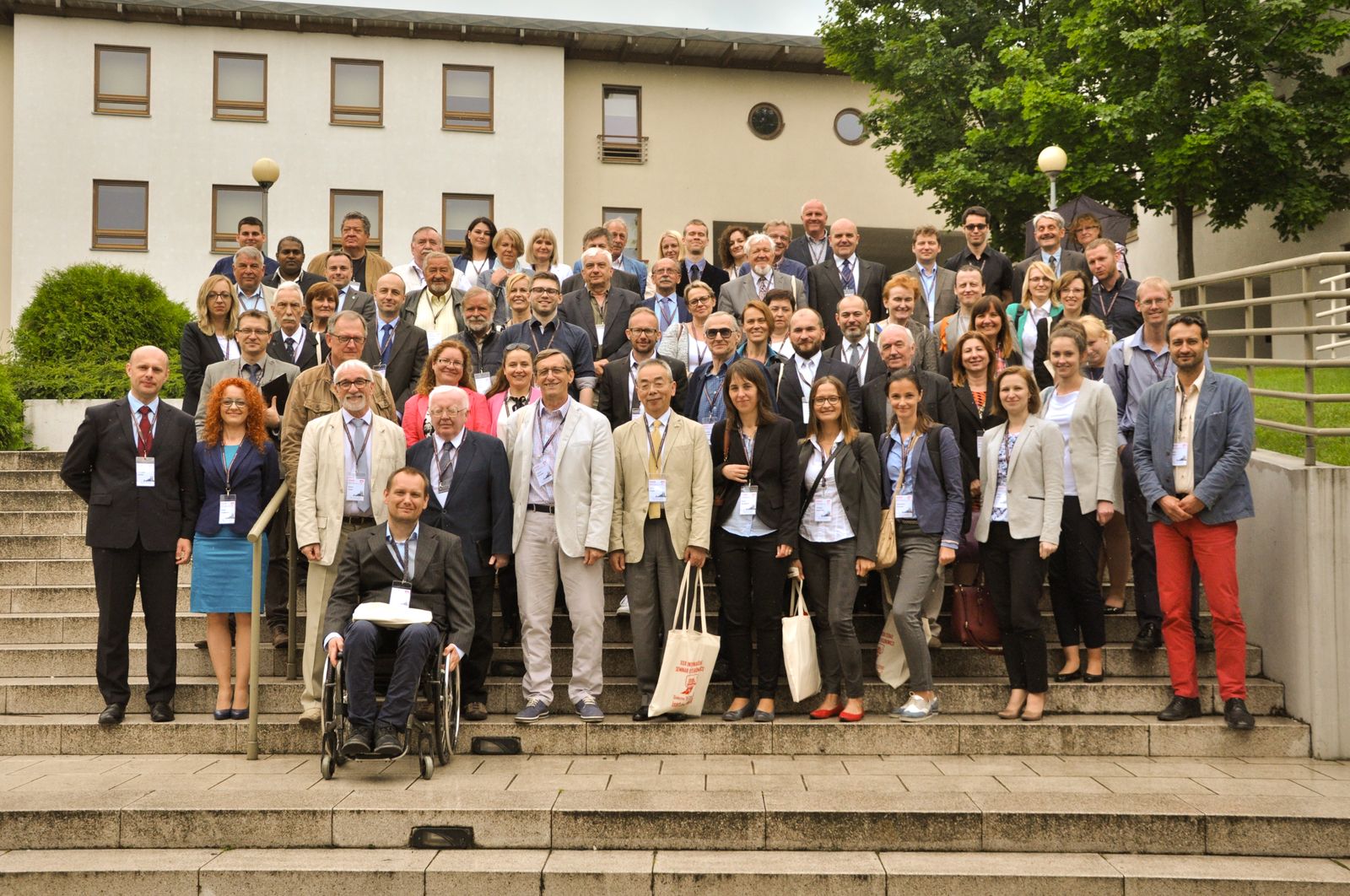
LEB The 29th International Seminar of Ergonomics was held in Gniezno (Poland) from 20th to 22th June 2016. This successful conference included topics of ergonomics, occupational safety engineering and quality engineering. Such an approach shows an interdisciplinary character of contemporary issues in science which require simultaneous actions in diverse directions and creates a synergistic effect that will help to solve the undertaken issues, both theoretical and practical. Some data:


  • more than 150 participants, LEB

  • more than 5 nationalities from Europe (Slovenia, Poland, France, UK, Hungary, Estonia, …) and from other continents (India, Iran, Sri Lanka, Japan, South Africa…)

  • 5 keynotes,

  • over 50 presentation,

  • 4 workshops,

  • a round table with between IEA, FEES and PES (PTErg).

For more information visit www.iset.poznan.pl.


FFES LogoCongratulations to Polish Ergonomics Society. This conference is endorsed by the Federation of the European Ergonomics Societies

Ergonomics 2016 – Zadar

CES
The 6th International Ergonomics Conference ERGONOMICS 2016
Focus on Synergy – was successfully held 15-18 June 2016 Zadar, Croatia.

CES
The 6th International Ergonomics Conference ERGONOMICS 2016
Focus on Synergy – was successfully held 15-18 June 2016 Zadar, Croatia.

Some few numbers below, just to give you an idea:

  • More than 50 participants,
  • More than 10 nationalities from Europe (Slovenia, Poland, France, UK, Austria, Germany, Romania, Hungary, Portugal…) and the rest of the world (Japan, Taiwan, Korea, South Africa, Argentines, India…)
  • 4 keynotes speakers, as former and present IEA’ President,

    • Y. Fujita: TIME FOR CREATING NEW ARENAS FOR ERGONOMICS
    • S. Leduc: ERGONOMICS AND ERGONOMISTS IN EUROPE: DISCIPLINARY APPROACHES AND JOB PRACTICES
    • Eric Min-yang Wang: THE INSPIRATION OF “SMALL IS BEAUTIFUL”: APPROPRIATE ERGONOMICS FOR LOCAL PEOPLE
    • U. Reischl, O. Salinas, M. Siemon, R. Oberleitner : REMOTE STUDENT PERFORMANCE ASSESSMENT USING A NOVEL SMART-PHONE APPLICATION
  • More than 30 lectures presentation,
  • More than 36 poster presentation.

A large diversity of Ergonomics issues was presented as physics, cognitive or organizational topics.

Congratulations to Croatian Ergonomics Society, organizers of this event.

FFES LogoThis conference was endorsed by the Federation of the European Ergonomics Societies.

For more info go to the conference site.

Information on the FEES COUNCIL meeting 2016

FFES Logo The next council meeting of the Federation of the European Ergonomics Societies (FEES) will be held in Amersfoort, Wednesday, 25th November 2016, hosted by HumanfactorsNL. The 2016 Council meeting will be organized in connection with the IEA 2018 Triennial Congress. The draft program is as follows:

FFES Logo The next council meeting of the Federation of the European Ergonomics Societies (FEES) will be held in Amersfoort, Wednesday, 25th November 2016, hosted by HumanfactorsNL. The 2016 Council meeting will be organized in connection with the IEA 2018 Triennial Congress. The draft program is as follows:

  • 23rd November: Council meeting
    • 13:30 Welcome
    • 14:00 Beginning
    • Opening, welcome and housekeeping
    • Roll call of the delegates/guests and apologies for absence ; welcome of new members ; call for miscellaneous items;
    • Approval of the draft agenda
    • Approval of the Council Meeting minutes in Paris, September, 26th 2015 (cf doc. attached)
    • Annual FEES Report (to be sent)
    • Report on Standing Committees
    • Financial Report FEES (cf docs. to be sent)
    • Follow up of the seminars preparing IEA 2018 Congress and organization of activities from FEES in 2017 on this issue
    • Membership (proposal of a FEES rules modification)
    • Projects for FEES
    • Next Council meeting : proposals to be made
    • Miscelleanous
    • 18:00 Closing
  • 24th November morning: Round Table discussion on „Ergonomics in design for all“
  • 24th November afternoon: Workshop on „Ergonomics and creativity“
  • 25th November morning: visit to KLM company, Schiphol

Registration form